
Author : Ms. Mallika
Facilitator | Science Enthusiast | Curious Learner
The most common question I often hear in my classrooms is “Why does this matter to me?”, a universal question posed by every inquisitive child. As a science educator, I hold a steadfast belief: science is not merely an academic subject—it is a powerful framework through which young minds begin to decode the world around them.
Yet, for many young learners, science can often appear abstract and disconnected from their daily experiences unless we make deliberate efforts to ground it in real life.
Opening the Door to Real-World Connections
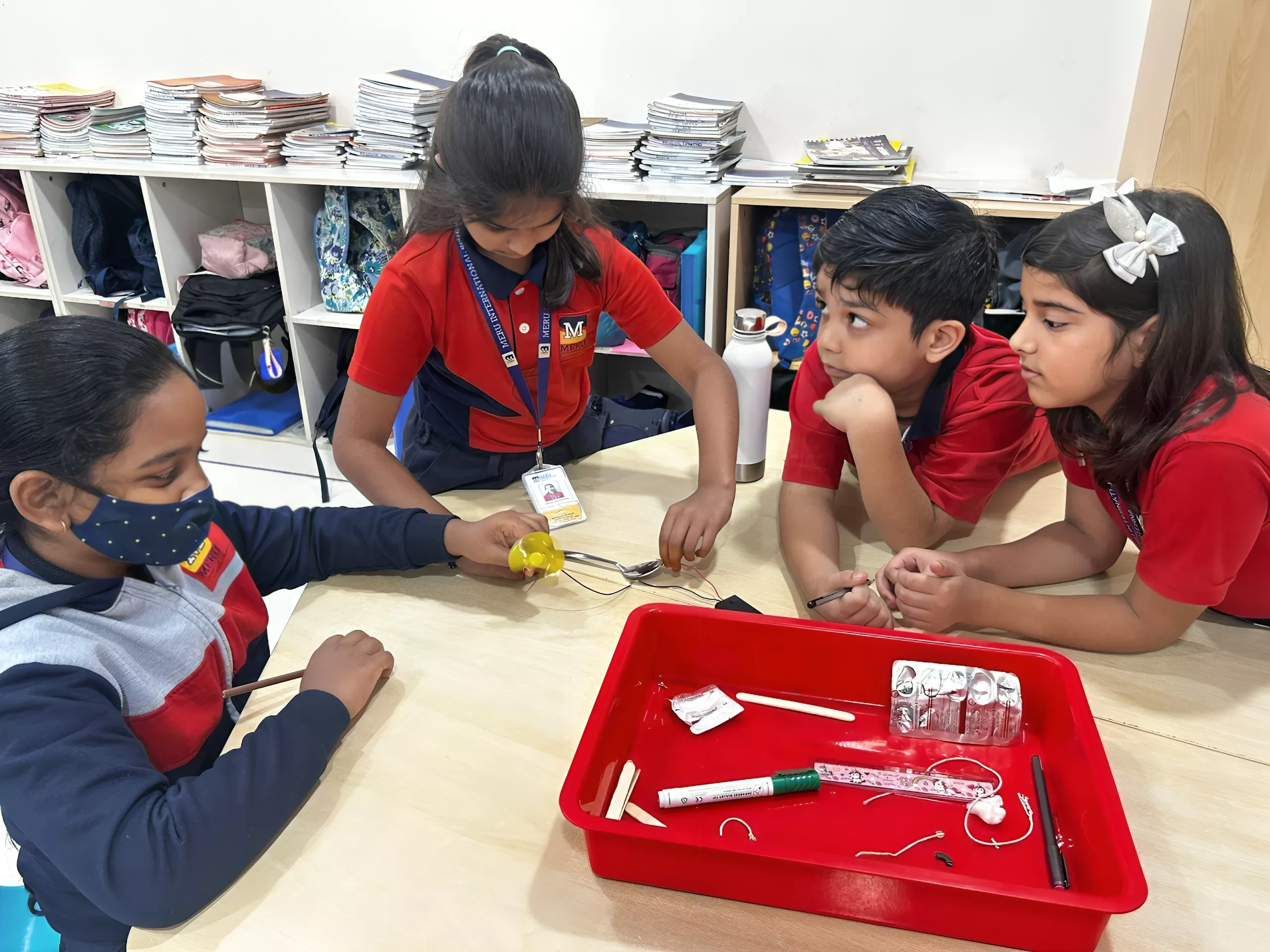
My goal as an educator is to empower learners to see science as a living, breathing part of their everyday world and not limit it to something confined to textbooks. To achieve this goal, I strive to intentionally anchor every concept I teach in practical and observable experiences. Whether I’m facilitating lessons on the skeletal system, materials, or the principles of force and motion.
Learning Beyond the Classroom: Science at Home
Science comes alive when students start seeing it in the world around them. This can be achieved by encouraging them to explore everyday objects through a scientific lens.
- A plastic-coated wire teaches them about insulation.
- A remote-controlled car introduces batteries and safe energy use.
- A lightbulb sparks questions about circuits and energy transfer.
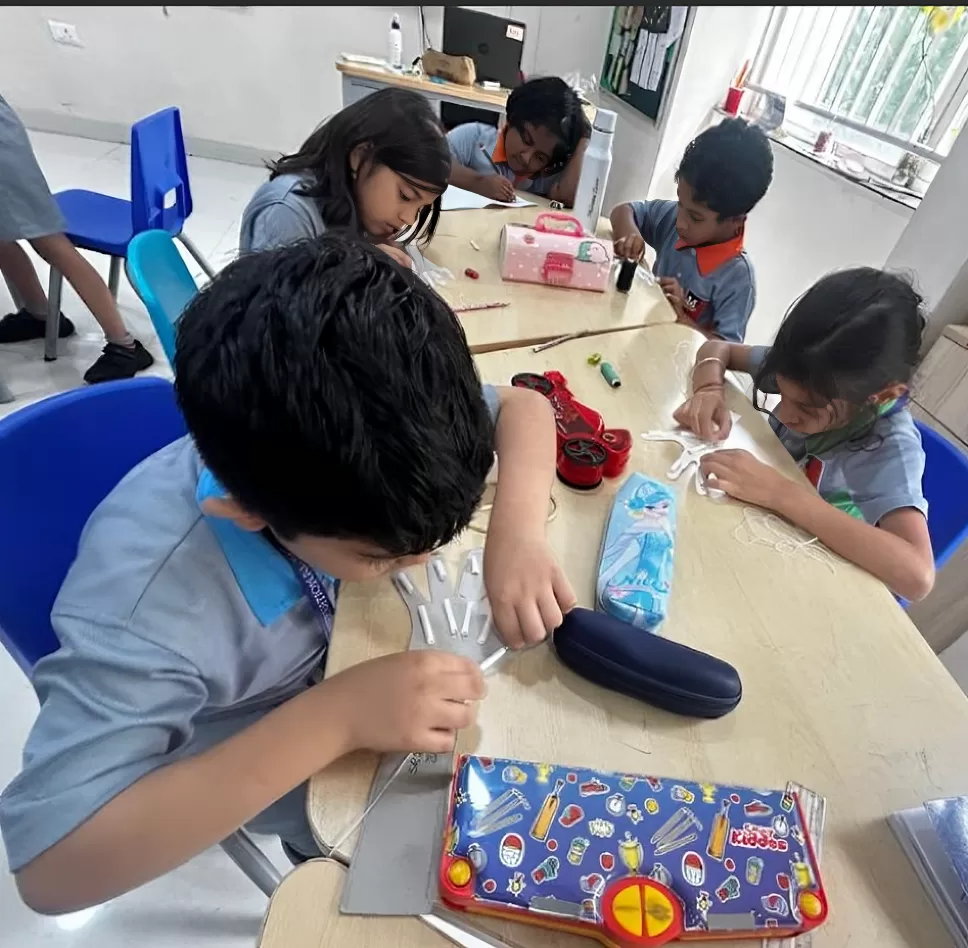
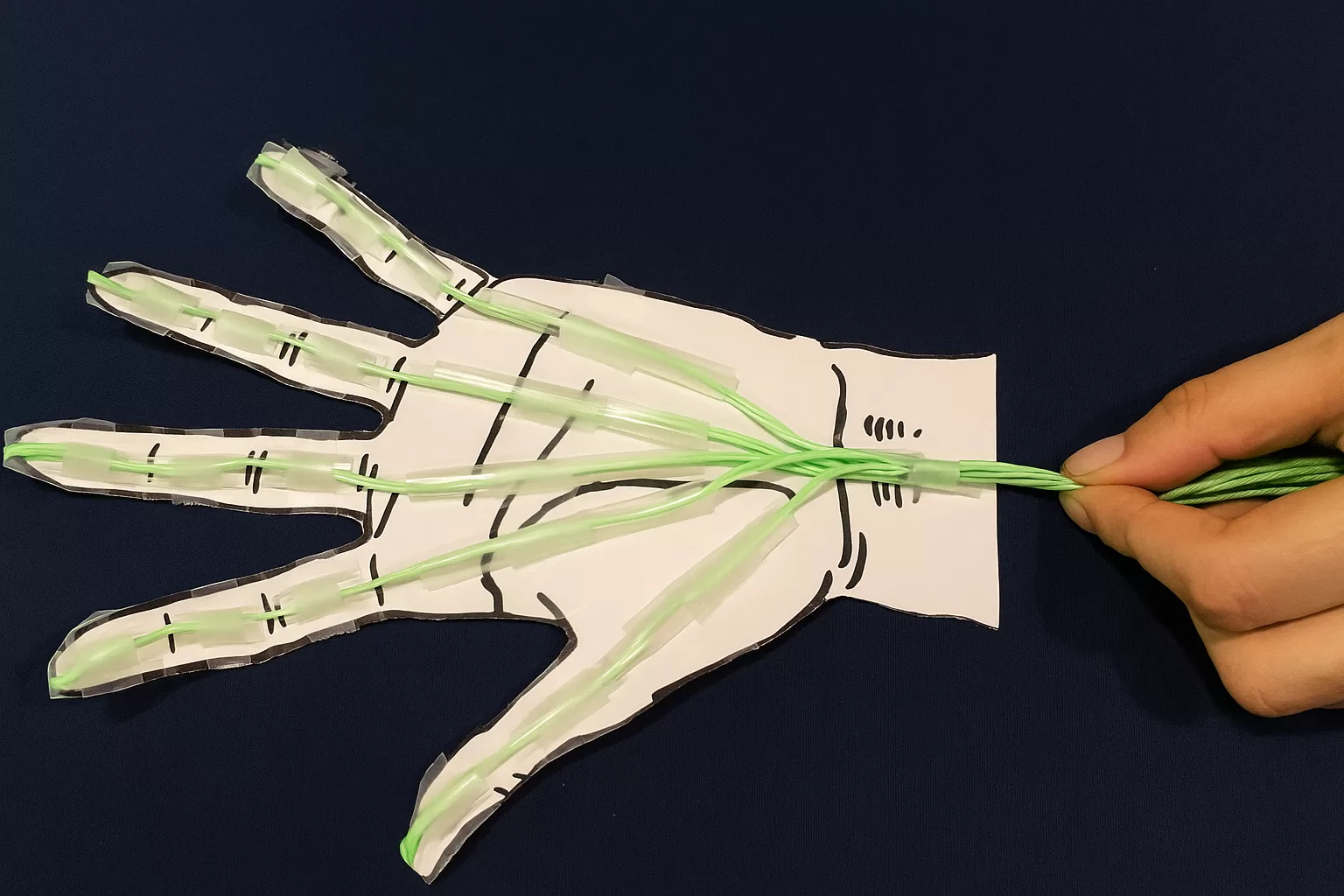
To extend this learning, in a class we integrated Home Connect tasks -simple activities that link classroom concepts to real life. While studying muscles and bones, students built hand models using straws, then observed their movements during dance or sports.
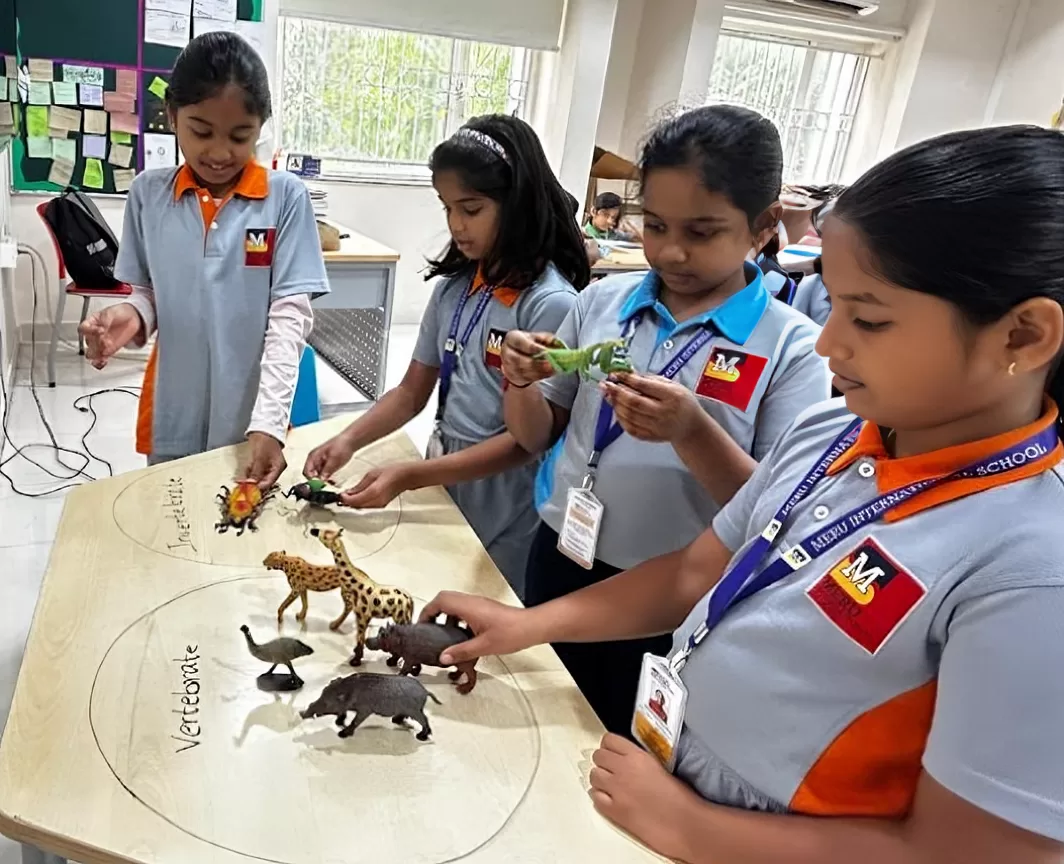
In a lesson on classification, students with the aid of animal figurines learned to categorize animals into vertebrates and invertebrates, then applied the same knowledge in real-world situations and went on nature walks to identify real-life examples of vertebrates and invertebrates.
These experiences turn science into something students don’t just study—they live. And that’s when true curiosity takes root.

Integrated Learning: From Classrooms to the World
When we design projects that blend science with math, language, art, and social studies, learning becomes interconnected. Children begin to see patterns across subjects and understand that knowledge isn’t confined to silos. learning becomes part of a larger story—woven into data, history, creativity, and communication.
In one classroom activity, we merged science with English to explore light and shadows. Students worked in groups to craft stories and perform them through puppet theatre. This kind of interdisciplinary learning turns every subject into a playground—where students explore ideas, make connections, and express understanding in meaningful, imaginative ways. It nurtures curiosity, builds confidence, and develops essential life skills like collaboration, critical thinking, and creativity.
We also link these classroom lessons to real-world issues through the UN Sustainable Development Goals (SDGs). For instance, under Life on Land, students researched pollution—its causes, effects, and possible solutions—as part of a Home Connect task. Lessons on food chains evolved into discussions on endangered species and habitat loss.
When students see that their everyday actions—like recycling, conserving water, or planting trees—can impact the planet, they begin to see themselves not just as learners, but as global citizens and changemakers.
More Than a Subject: Science as a Way of Thinking
Science shouldn’t be a chapter to memorise; in fact, no subject should. They should be a question to explore. When students realise science is behind their gadgets, meals, clothes, and the sky above, they start to see it everywhere. And in doing so, they begin to see themselves as scientists—curious, observant, and capable.
One of the most powerful ways to spark this shift is through role-play and simulation. Whether becoming particles in motion, the sun in an experiment, or droplets in the water cycle, students don’t just learn science—they live it. These active experiences make abstract ideas tangible and unforgettable.
In today’s world of climate change and rapid innovation, the future needs more than knowledge—it needs scientific thinking. That’s why my goal isn’t just to teach facts, but to nurture minds that wonder, question, and imagine.
If you’re an educator, I invite you to reflect:
How are you making subjects relevant in your classroom today?
Because learning is not limited to classrooms…
It’s everywhere.