Author: Mr. Neelakanteswara Reddy MB, Dy. Manager IT & Operations
At Meru International School, our commitment to technology goes beyond digital boards and smart classrooms—it’s about building a school ecosystem that is transparent, responsive, and secure. Through seamless integration of digital tools, we ensure that parents are not just informed, but actively engaged in their child’s learning journey. In fact, some of the most powerful endorsements of our IT initiatives come from parents themselves—who consistently share how Meru’s tech-enabled approach gives them confidence, clarity, and peace of mind. Here’s how our digital systems help build lasting trust with the Meru parent community:
1. Real-Time Communication That Keeps Parents Connected
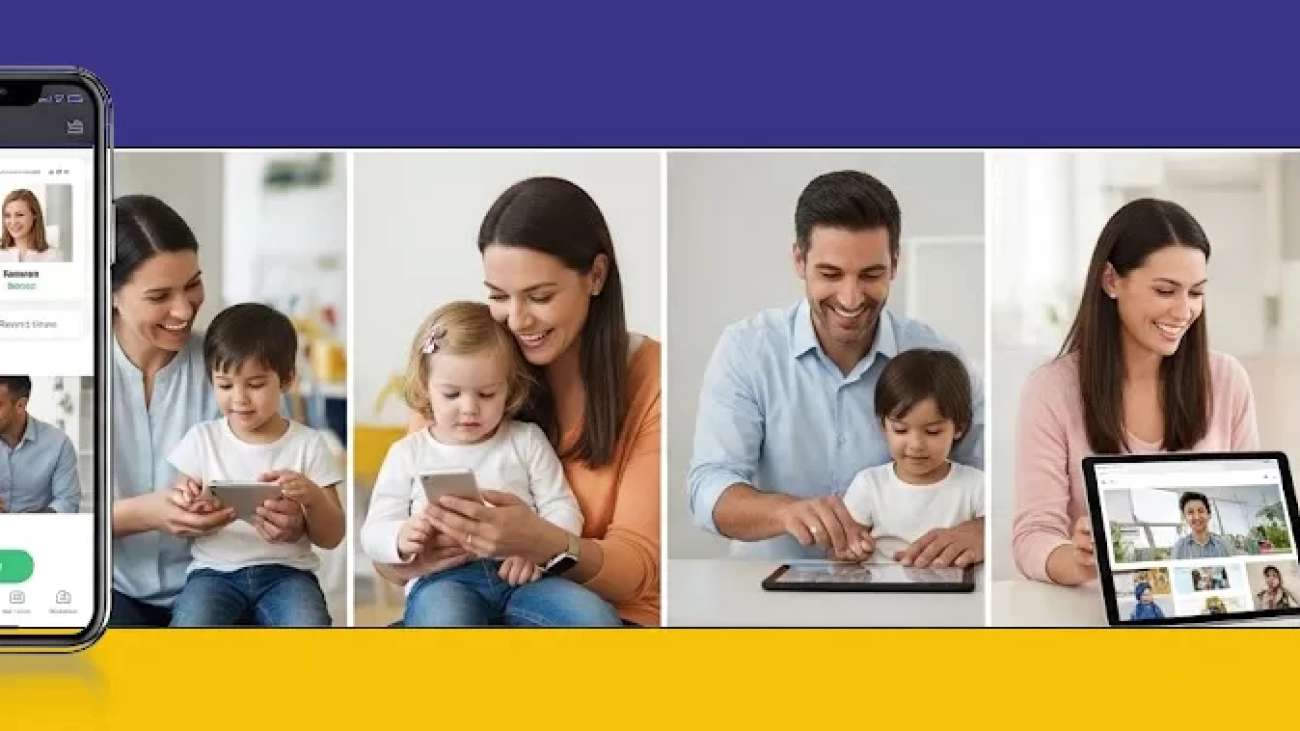
At Meru, communication with parents is proactive, not reactive. Through our school ERP system and dedicated mobile app, families receive real-time updates on attendance, class schedules, homework, circulars—even lunch menus and bus tracking. Push notifications ensure nothing slips through the cracks, while two-way messaging with teachers fosters a culture of openness and collaboration.
📣 Parent Voice: “I love how I don’t have to wait until PTM to know how my child is doing. Everything is updated in real-time. I feel more involved.”
2. Instant Access to Assessments and Academic Progress
Gone are the days of waiting for printed report cards or sifting through stacks of papers. At Meru, our secure digital portals give parents immediate access to report cards, teacher feedback, and even performance analytics. With just a few clicks, they can track academic progress, identify areas of growth, and stay informed about their child’s learning journey—all in real time.
📊 Parent Voice: “The digital report is so detailed, yet easy to understand. It’s helpful to see my child’s growth charted over time.”
3. Seamless Remote Learning, Even in Uncertain Times
Whether during the COVID-19 pandemic or unexpected school closures, Meru’s digital readiness ensured uninterrupted learning. With platforms like Google Meet, interactive whiteboards, and recorded lessons, students stayed engaged—and parents stayed assured. The swift transition to online learning reflected not just technical preparedness, but a deep commitment to continuity and care.
💻 Parent Voice: “Meru handled the online transition better than many corporate offices! We never felt disconnected.”
4. Safety You Can See, Transparency You Can Trust
At Meru, technology supports not just learning—but well-being. With CCTV surveillance across the campus and school buses, along with real-time transport tracking, parents stay informed and reassured. Notifications about arrivals and departures offer added peace of mind, making safety visible and communication seamless.
🛡️ Parent Voice: “I appreciate the security tech at Meru. I get a notification the moment my daughter enters or exits the campus.”
5. A Virtual Window Into School Life
One of Meru’s most heartwarming tech-driven initiatives is the daily live streaming of General Assemblies on Facebook. Whether it’s a student’s speech, a class performance, or a moment of recognition, parents can tune in live—or watch the recording later. This digital window allows families to stay emotionally connected to their child’s school experience, no matter where they are. 🎥 Parent Voice: “Watching my son perform live at the morning assembly from my office made my day! This initiative truly bridges the gap between school and home.”
Watch General Assembly Videos
Conclusion: A Digital Bridge Built on Trust
At Meru, technology isn’t just about convenience—it’s about connection. When parents trust the systems in place, they feel more involved, more informed, and more confident in their child’s education. Our IT framework serves as a digital bridge, strengthening the partnership between school and home. And for us, the true measure of success isn’t just in the tools we use—but in the trust, transparency, and satisfaction we build with every Meru family.
Author: Mr. Neelakanteswara Reddy MB, Dy. Manager IT & Operations
Introduction:
There was a time when technology was seen as a luxury as an add-on, rather than a necessity. But over the past few decades, it has transformed how we live, work, communicate, and learn. From the way we shop to how we navigate, connect, and solve problems, technology is now embedded in nearly every step of our daily lives. In the realm of education, this evolution is even more profound.
In today’s education landscape, Information Technology (IT) is not just a support system—it’s a cornerstone of effective teaching and learning. As the deputy manager of IT and Operations at Meru International School, I’ve had the privilege of witnessing how a robust IT framework significantly empowers our teachers. From lesson planning to assessments, IT simplifies tasks, enhances engagement, and saves valuable time. This change has evolved the way modern-day schools operate. As schools across the nation are evolving and adopting a more tech-centric approach, it is important to know how different school environments, IT-powered and non-IT-powered, are, and how these differences translate into real benefits for teachers.
1. From Chalkboards to Smart Boards: How Classrooms Are Evolving
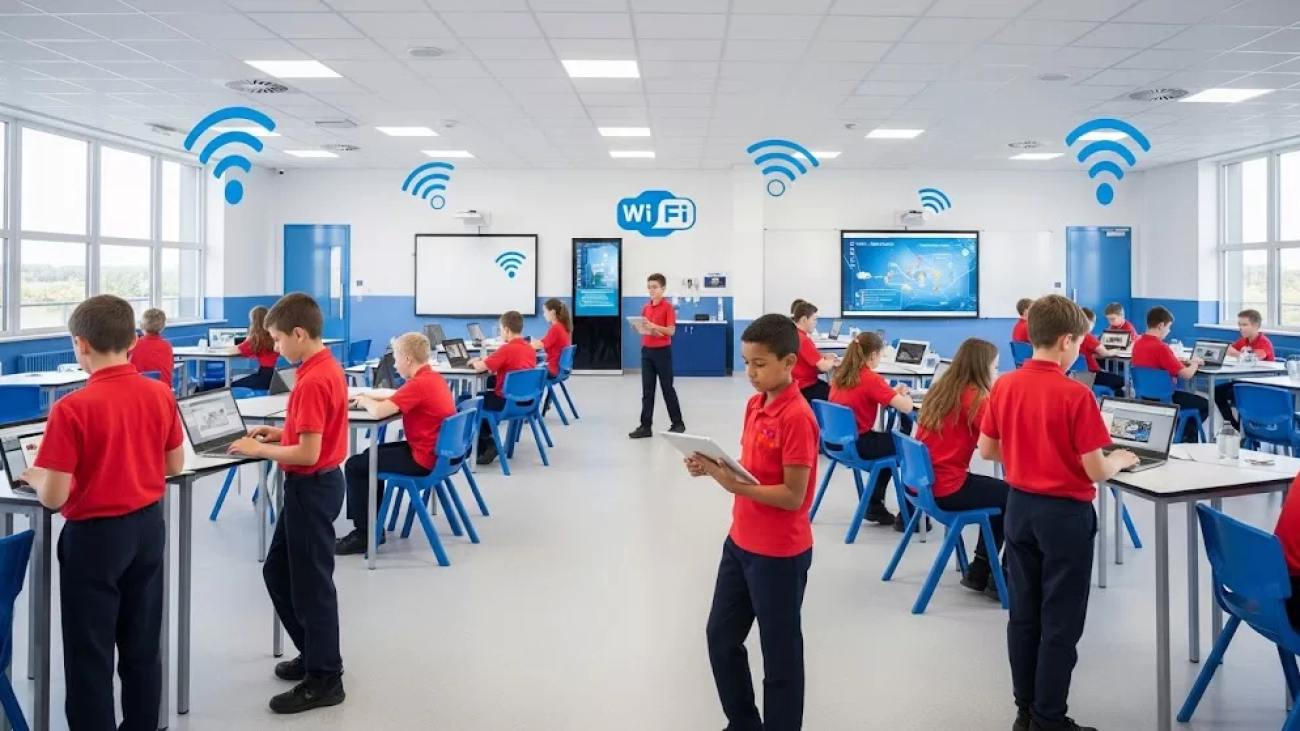
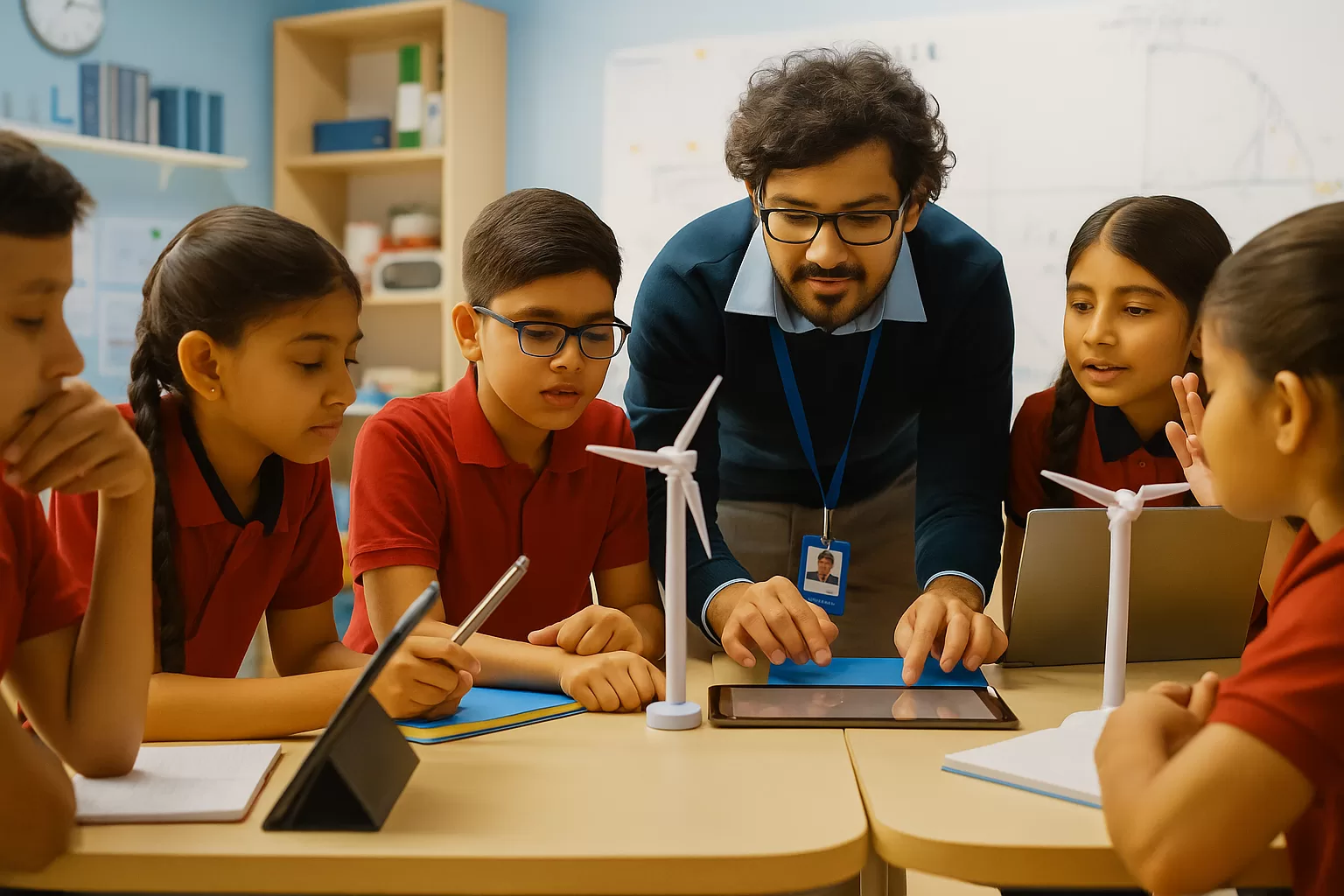
When we imagine a tech-enabled classroom, digital boards are often the first thing that comes to mind. And for good reason. At Meru, our classrooms are equipped with smart boards and screen-sharing tools that transform traditional lessons into dynamic learning experiences. With access to multimedia resources; like videos, simulations, and interactive games teachers can make complex or abstract topics come alive.
In contrast, non-IT classrooms often rely solely on whiteboards or chalk-and-talk methods, where teaching is largely lecture-driven and visual engagement is minimal. While effective in their time, these traditional methods often limit the interactivity that students need today.
For teachers, the shift to digital means more than just convenience; it means flexibility. They can tailor their instruction to suit different learning styles, keep students engaged, and break the monotony of one-way teaching. Which results in smarter classrooms, empowered educators, and students who are truly connected to their learning.
2. Smarter Lesson Planning, Seamless Access
In a tech-enabled environment like Meru, lesson planning is no longer a time-consuming, isolated task. With cloud-based platforms such as Google Workspace, teachers can create, organise, and access their lesson plans anytime, anywhere. They also tap into global repositories of curated content, AI-supported planning tools, and collaborative features that make sharing resources with colleagues effortless.
On the other hand, in non-IT schools, lesson planning often remains a manual process, relying on handwritten notes or files saved locally with limited access to updated or diverse teaching materials. This can restrict both efficiency and creativity.
For educators, the benefit is clear: less time spent on paperwork and more time to focus on what truly matters: student learning, classroom engagement, and instructional innovation.
3. Smarter Assessments, Faster Feedback
At Meru, technology has transformed how assessments are conducted and feedback is delivered. Teachers use digital tools like Google Forms, ERP-integrated tests, and auto-grading systems to evaluate student performance efficiently. These platforms offer instant insights, enabling personalised feedback and ongoing progress tracking—all with just a few clicks.
In contrast, non-IT schools often rely on manual grading, physical records, and handwritten reports. This not only consumes valuable time but also increases the likelihood of errors and delays in sharing feedback with students and parents.
For teachers, digital assessment tools mean less time spent on paperwork and more time focused on what matters most: understanding student learning patterns, identifying gaps, and tailoring instruction accordingly.
4. Continuous Growth Through Collaboration and Learning
In a digitally connected school like Meru, professional development isn’t limited to occasional workshops—it’s an ongoing journey. Teachers have access to a wealth of online learning opportunities, from webinars and certification courses to virtual conferences led by global experts. Digital collaboration tools like shared drives, WhatsApp groups, and internal portals make it easy to exchange ideas, co-plan lessons, and stay connected—whether on campus or working remotely.
In comparison, non-IT schools often depend solely on in-person training sessions and traditional meetings, limiting flexibility and exposure to new perspectives. Collaboration is slower, and professional learning can take a back seat to logistical constraints.
For educators, Meru’s tech-enabled approach means staying current, supported, and inspired—fueling both individual growth and collective innovation in teaching.
5. Ready for Anything: Ensuring Continuity in Uncertain Times
The COVID-19 pandemic was a true test of adaptability for schools across the globe. At Meru, the transition to online learning was swift and seamless—thanks to our robust IT systems. Platforms like Zoom, Google Meet, and integrated learning portals allowed teaching and learning to continue uninterrupted, preserving momentum and morale.
In contrast, schools without a strong IT foundation faced significant disruptions. The absence of digital infrastructure led to delays in curriculum delivery, widened learning gaps, and made it challenging for educators to maintain consistent engagement.
For teachers, having access to digital tools means being prepared for any scenario—whether teaching in-person, online, or through a hybrid model. It provides flexibility, peace of mind, and the confidence to keep education moving forward, no matter what.
The difference between IT-enabled and traditional schools goes far beyond infrastructure—it’s a difference in opportunity, agility, and impact. At Meru International School, technology empowers our teachers to do more than deliver lessons—they innovate, collaborate, and inspire. With the right digital tools and support systems, our educators are not only keeping pace with change—they’re leading it. And in doing so, they’re shaping a generation of learners who are curious, connected, and ready for the future.
Technology has become an integral part of children’s learning and development in today’s fast-paced world. Interactive educational tools and instant communication have revolutionized the way children engage with knowledge and the world around them.
Education and learning have become engaging and accessible through online courses, apps, and the multitude of available digital resources, allowing children to connect and communicate with peers and mentors beyond geographical boundaries, helping them develop social and collaborative skills. Technology plays a crucial role in skill development, offering platforms where children can learn real-world applicable skills such as coding, problem-solving, and creativity through interactive experiences.
Technology, when used thoughtfully, offers a range of benefits for children across learning, creativity, and communication. Interactive apps, online courses, and educational videos make learning more engaging and enjoyable, while digital tools like drawing apps, coding platforms, and music software nurture creativity and innovation.
Technology also strengthens communication by helping children stay connected with family and friends through video calls and messaging. Beyond entertainment, it promotes critical skills like problem-solving and coding, thanks to a variety of skill-based platforms. With easy access to vast online information, children are empowered to explore knowledge far beyond textbooks. And through educational games, audiobooks, and documentaries, technology also provides meaningful relaxation that supports holistic development.
Integrating ICT Skills with Classroom Strategies at Meru
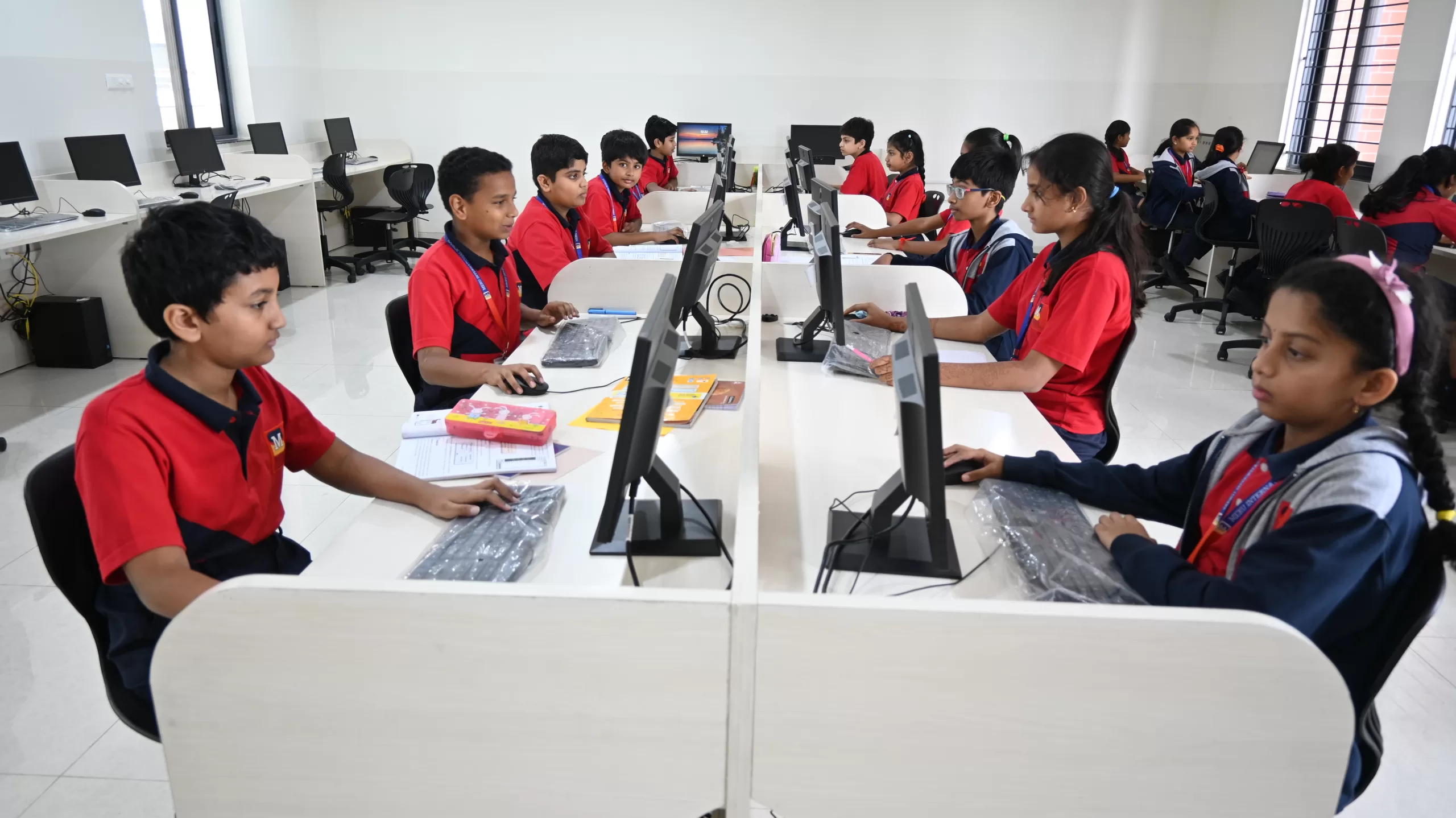
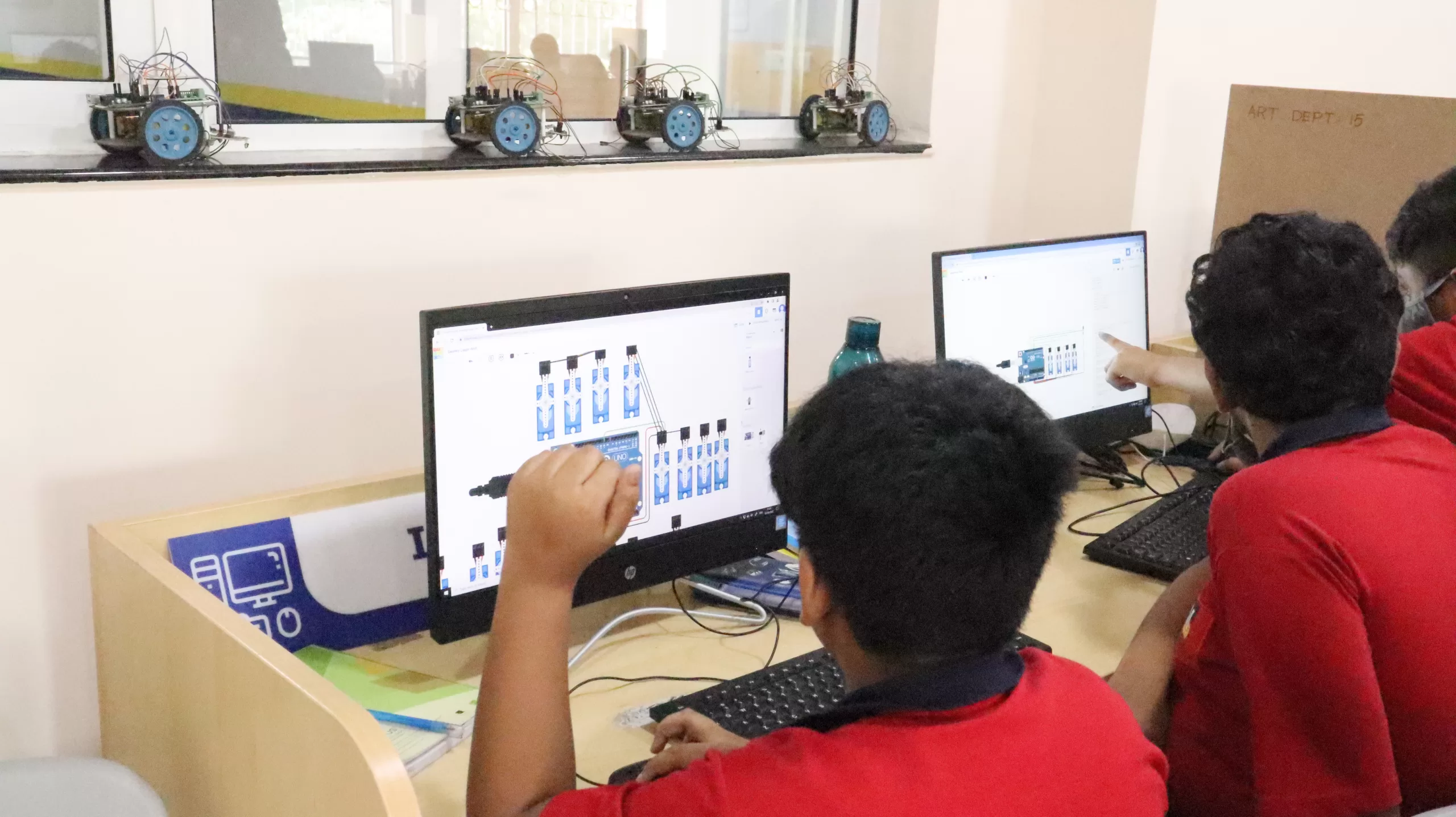
At Meru International School, students develop essential ICT skills that go beyond basic computer use. From computer literacy and internet navigation to word processing, data management, and cybersecurity awareness, students build a strong digital foundation. They also explore coding and digital creativity through tools like Scratch, Kodu, and Construct, nurturing problem-solving and innovation.
These skills are seamlessly woven into practical classroom strategies that keep students engaged and reflective. Project-based learning allows students to tackle real-world challenges while building digital reports and presentations. Gamification tools such as Kahoot, Quizizz, and Scratch make learning fun, while visual platforms like Draw.io and Gamma.ai support creative thinking and structured content creation. Inquiry-based learning and cross-curricular integration encourage students to connect ideas across subjects, making learning deeper and more relevant.
To ensure learning is meaningful, teachers at Meru use formative assessments, visual thinking routines (like Think-Pair-Share and “I Used to Think, Now I Think”), and self-assessments to guide student reflection and progress. This integrated approach empowers students to become confident, creative, and future-ready learners in a tech-driven world.
Final thoughts
Technology is a powerful tool shaping how children learn, connect, and build essential skills in today’s digital world. It fosters creativity, enhances education, and opens new avenues for growth. But responsible use is crucial—balancing screen time, ensuring safety, and encouraging meaningful engagement help children benefit without harm. By guiding them toward a healthy relationship with digital tools, we empower them to become curious, capable, and innovative learners.
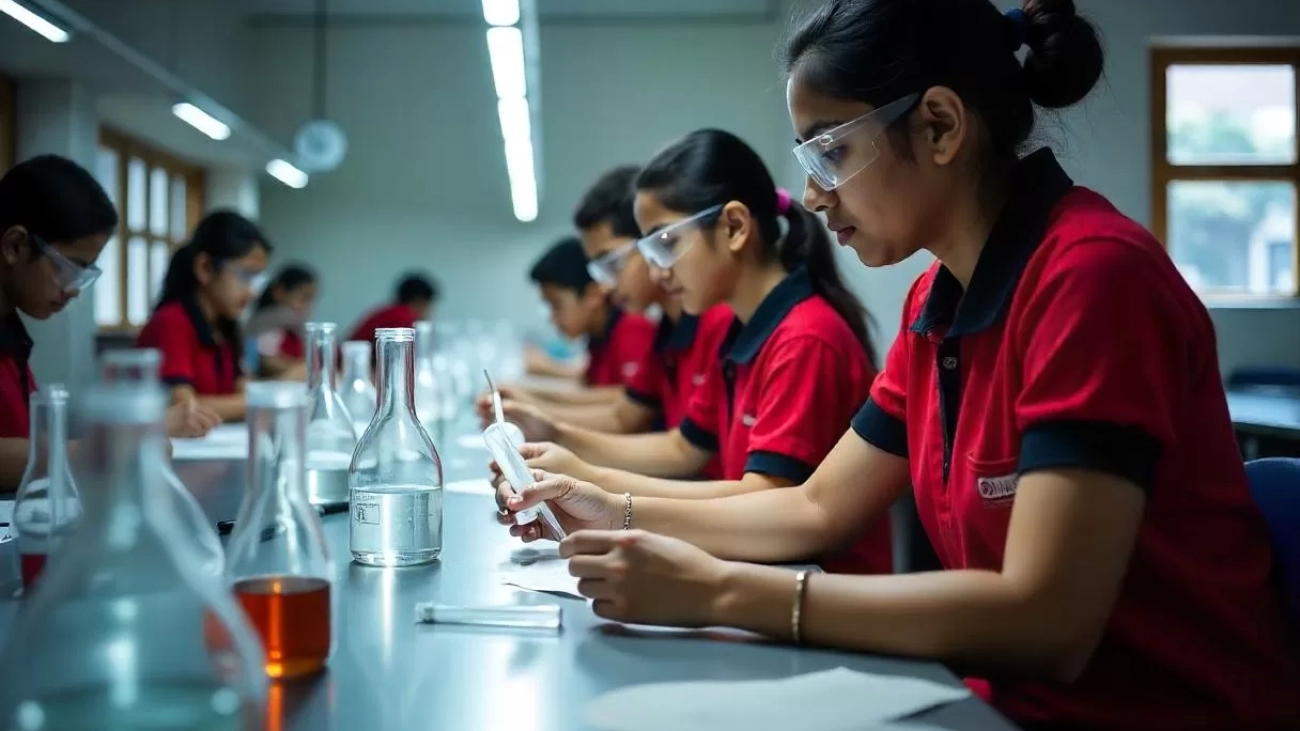
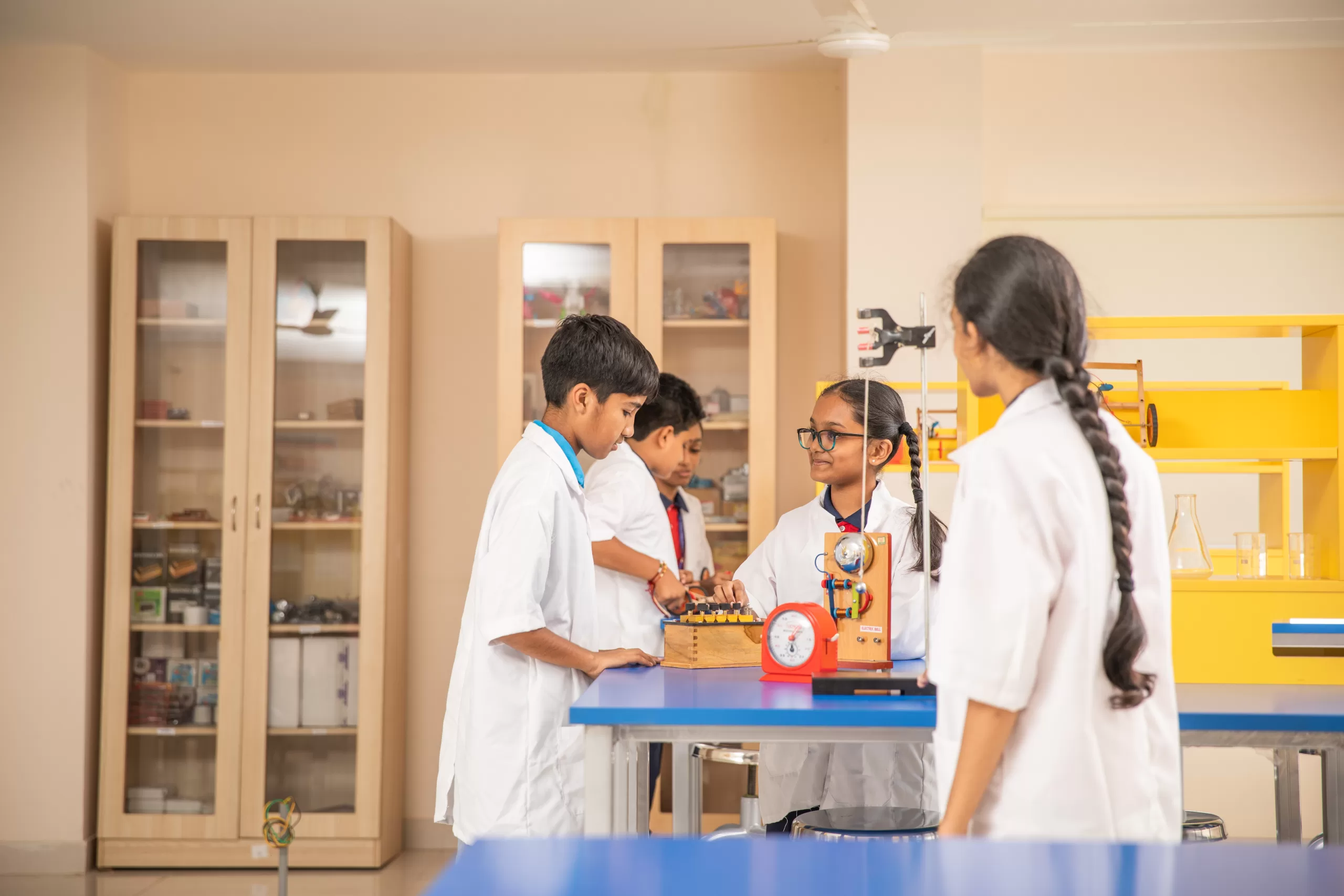
The most common question I often hear in my classrooms is “Why does this matter to me?”, a universal question posed by every inquisitive child. As a science educator, I hold a steadfast belief: science is not merely an academic subject—it is a powerful framework through which young minds begin to decode the world around them.
Yet, for many young learners, science can often appear abstract and disconnected from their daily experiences unless we make deliberate efforts to ground it in real life.
Opening the Door to Real-World Connections
My goal as an educator is to empower learners to see science as a living, breathing part of their everyday world and not limit it to something confined to textbooks. To achieve this goal, I strive to intentionally anchor every concept I teach in practical and observable experiences. Whether I’m facilitating lessons on the skeletal system, materials, or the principles of force and motion.
Learning Beyond the Classroom: Science at Home
Science comes alive when students start seeing it in the world around them. This can be achieved by encouraging them to explore everyday objects through a scientific lens.
A plastic-coated wire teaches them about insulation.
A remote-controlled car introduces batteries and safe energy use.
A lightbulb sparks questions about circuits and energy transfer.
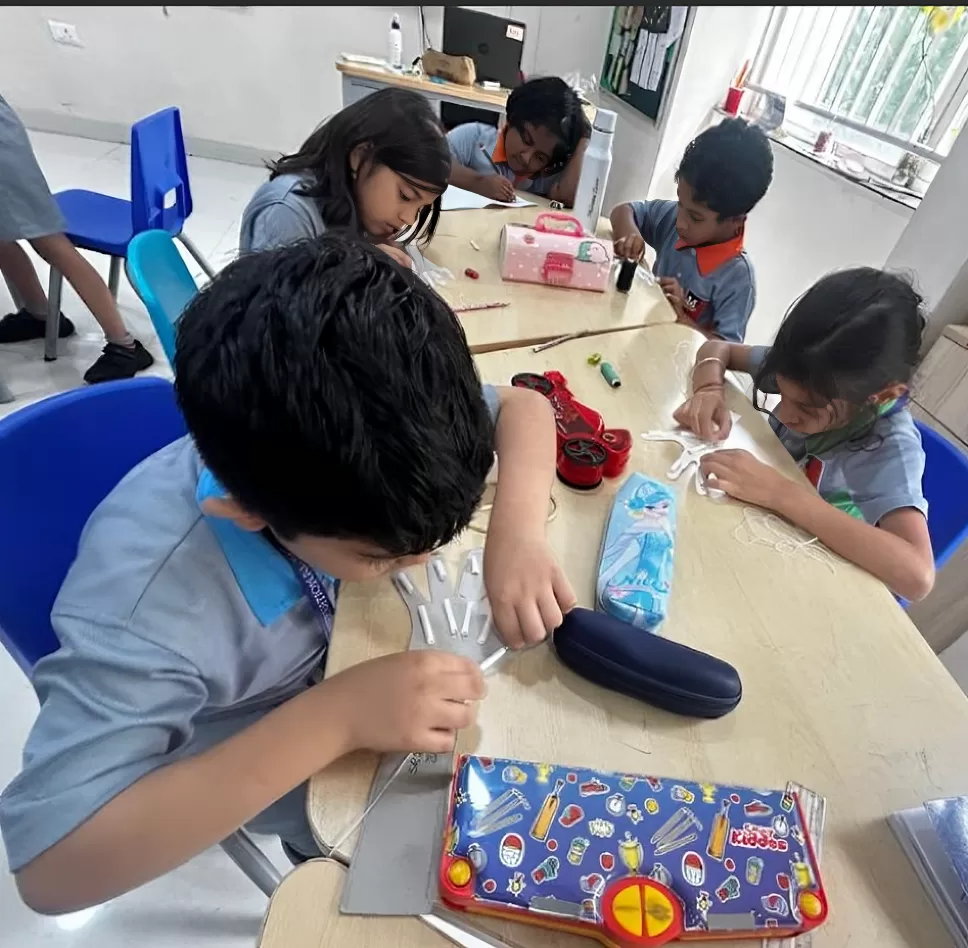
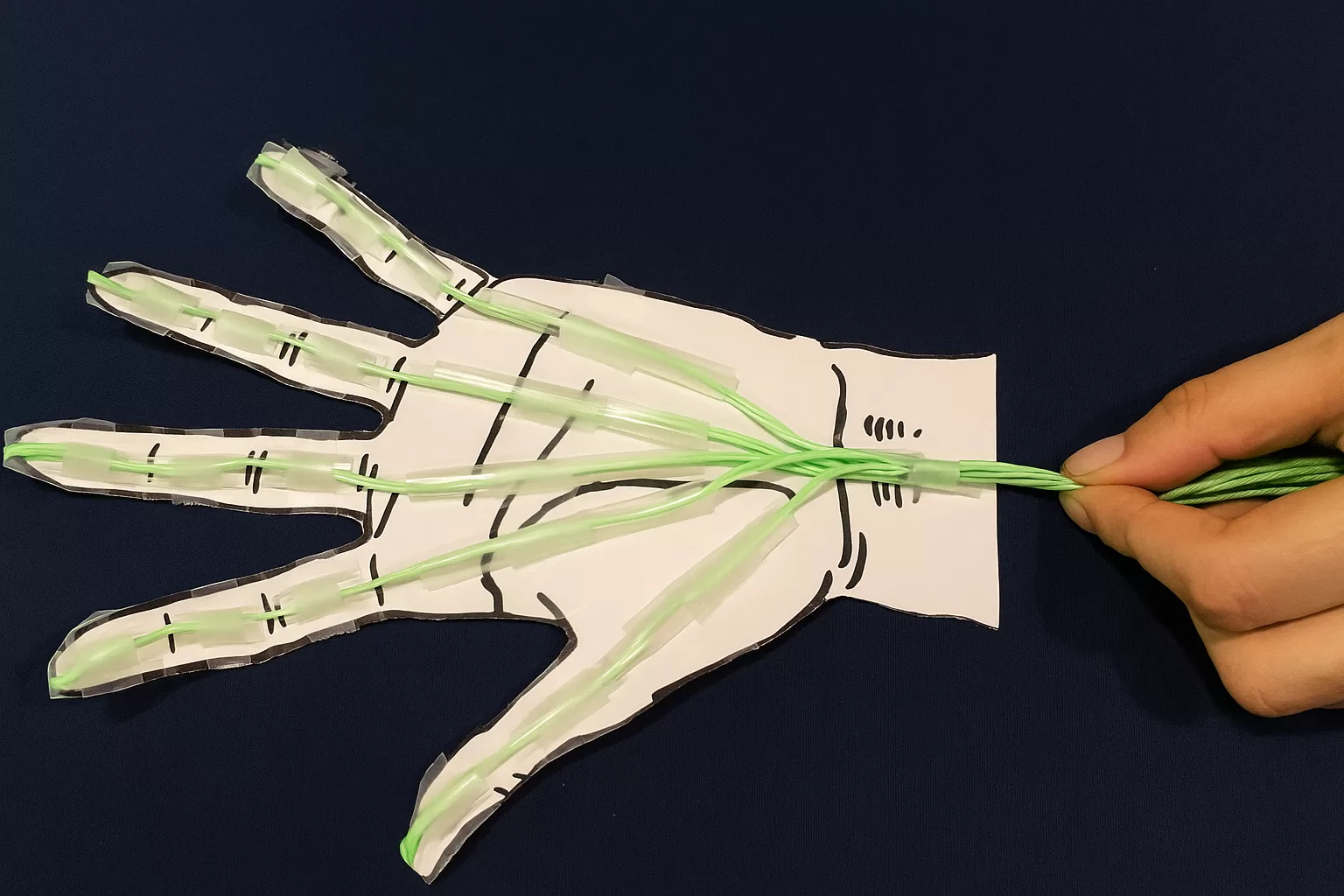
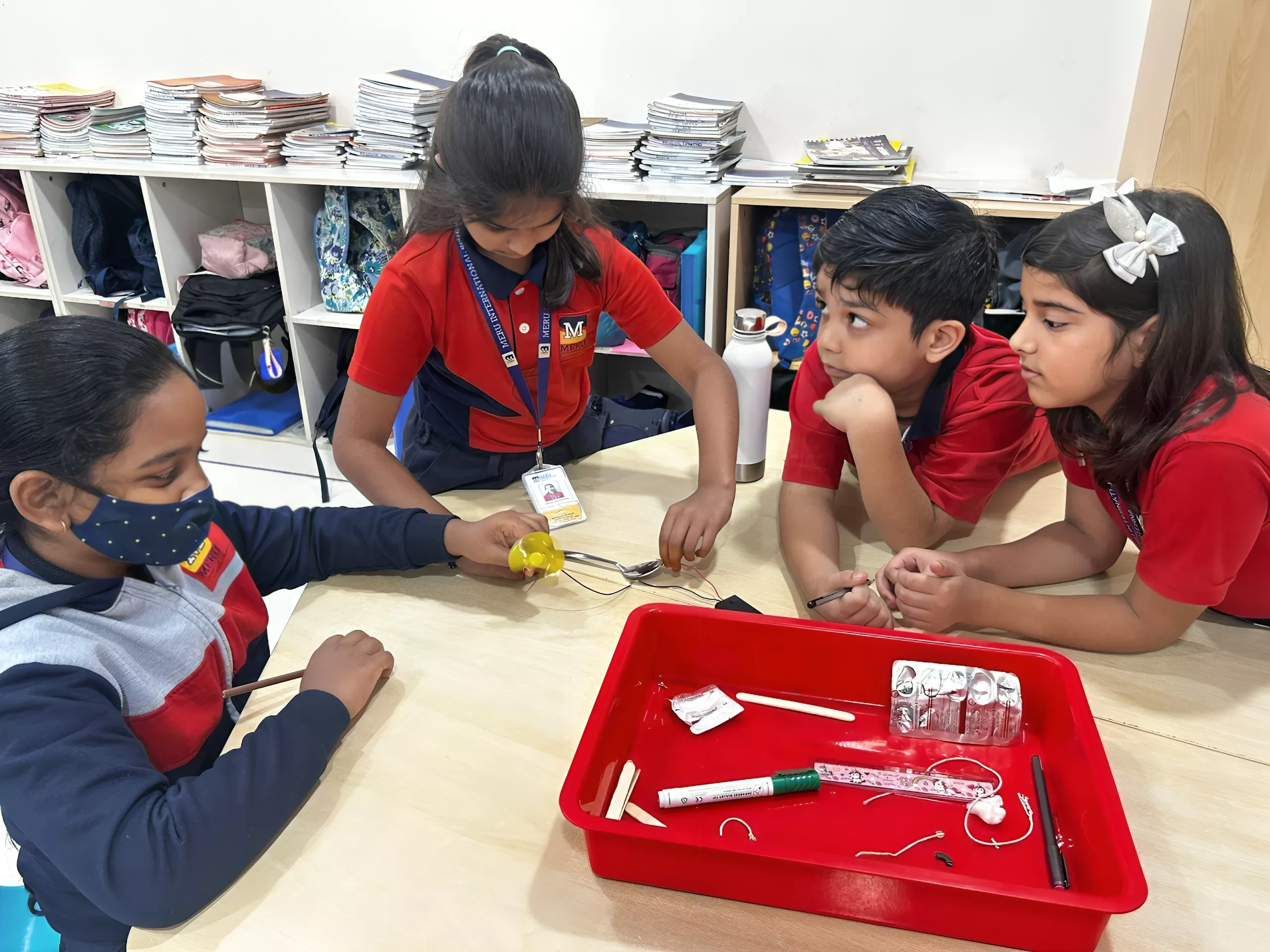
To extend this learning, in a class we integrated Home Connect tasks -simple activities that link classroom concepts to real life. While studying muscles and bones, students built hand models using straws, then observed their movements during dance or sports.
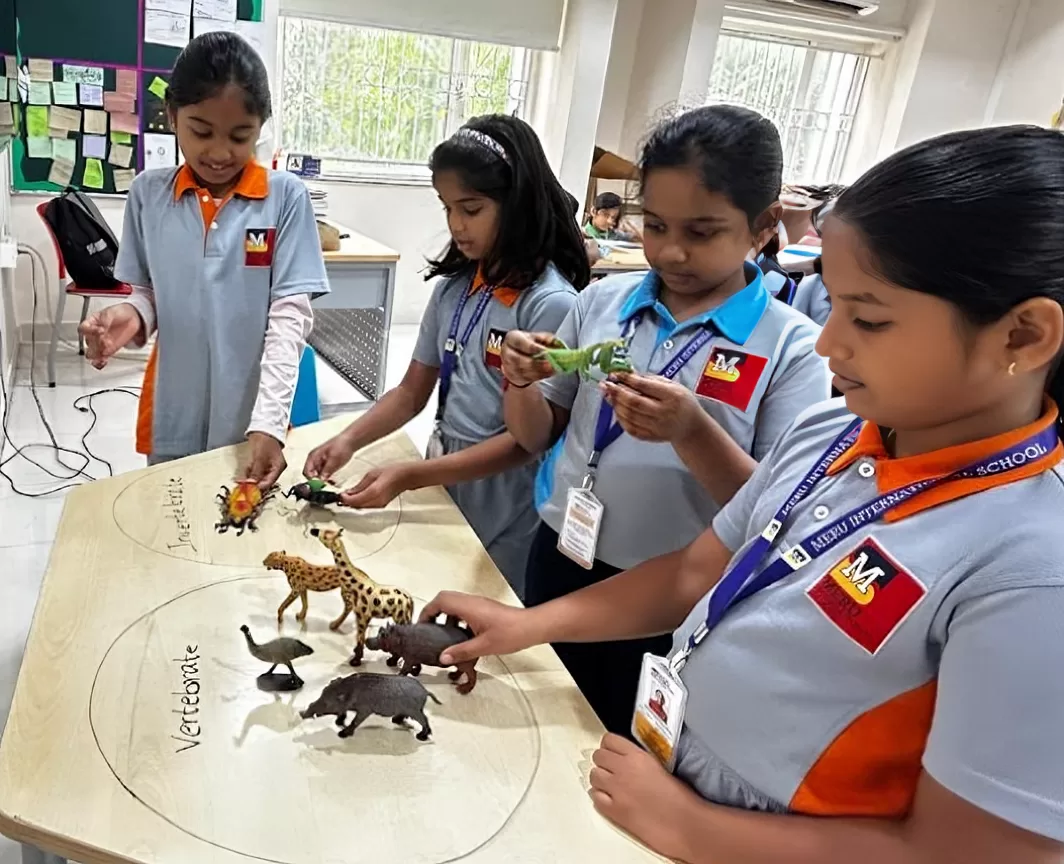
In a lesson on classification, students with the aid of animal figurines learned to categorize animals into vertebrates and invertebrates, then applied the same knowledge in real-world situations and went on nature walks to identify real-life examples of vertebrates and invertebrates.
These experiences turn science into something students don’t just study—they live. And that’s when true curiosity takes root.
Integrated Learning: From Classrooms to the World
When we design projects that blend science with math, language, art, and social studies, learning becomes interconnected. Children begin to see patterns across subjects and understand that knowledge isn’t confined to silos. learning becomes part of a larger story—woven into data, history, creativity, and communication.
In one classroom activity, we merged science with English to explore light and shadows. Students worked in groups to craft stories and perform them through puppet theatre. This kind of interdisciplinary learning turns every subject into a playground—where students explore ideas, make connections, and express understanding in meaningful, imaginative ways. It nurtures curiosity, builds confidence, and develops essential life skills like collaboration, critical thinking, and creativity.
We also link these classroom lessons to real-world issues through the UN Sustainable Development Goals (SDGs). For instance, under Life on Land, students researched pollution—its causes, effects, and possible solutions—as part of a Home Connect task. Lessons on food chains evolved into discussions on endangered species and habitat loss.
When students see that their everyday actions—like recycling, conserving water, or planting trees—can impact the planet, they begin to see themselves not just as learners, but as global citizens and changemakers.
More Than a Subject: Science as a Way of Thinking
Science shouldn’t be a chapter to memorise; in fact, no subject should. They should be a question to explore. When students realise science is behind their gadgets, meals, clothes, and the sky above, they start to see it everywhere. And in doing so, they begin to see themselves as scientists—curious, observant, and capable.
One of the most powerful ways to spark this shift is through role-play and simulation. Whether becoming particles in motion, the sun in an experiment, or droplets in the water cycle, students don’t just learn science—they live it. These active experiences make abstract ideas tangible and unforgettable.
In today’s world of climate change and rapid innovation, the future needs more than knowledge—it needs scientific thinking. That’s why my goal isn’t just to teach facts, but to nurture minds that wonder, question, and imagine.
If you’re an educator, I invite you to reflect: How are you making subjects relevant in your classroom today? Because learning is not limited to classrooms… It’s everywhere.
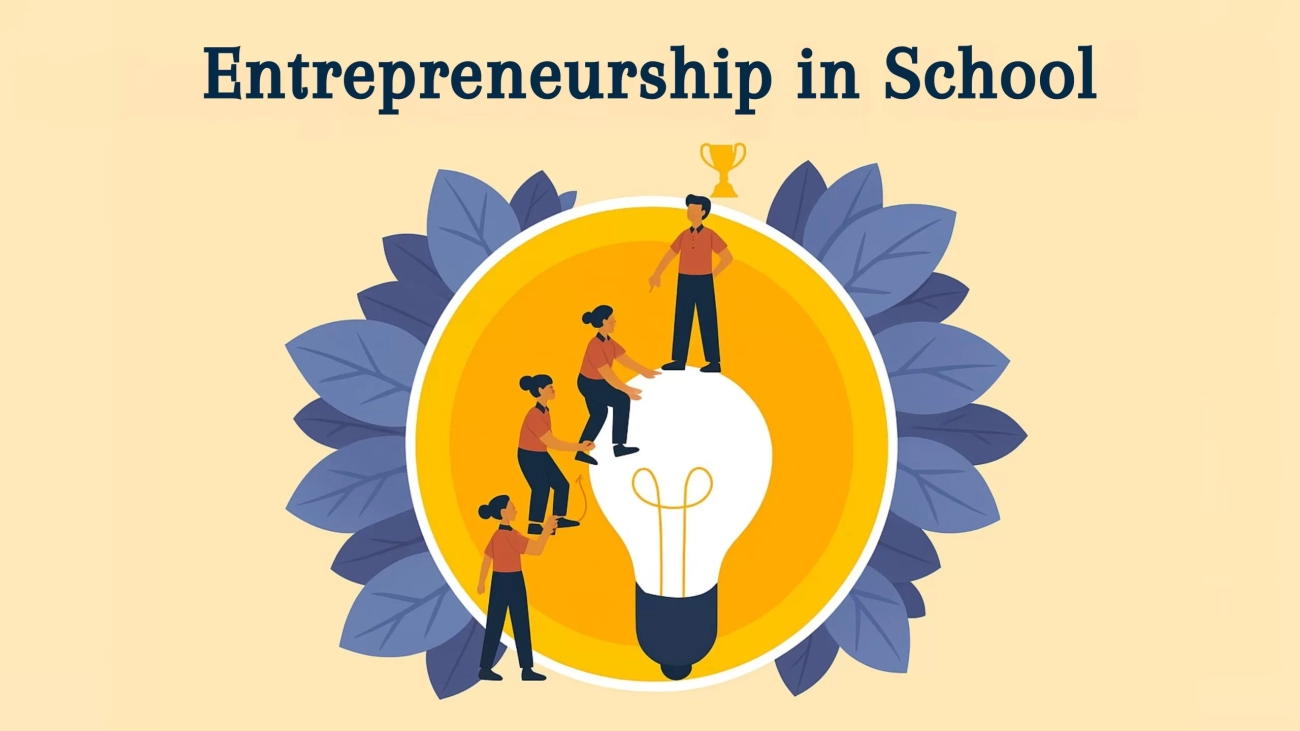
Entrepreneurship has evolved from being a business buzzword to a critical life skill. In a world driven by innovation, automation, and rapid change, the ability to think creatively, solve problems, and lead with initiative is more valuable than ever. Once seen as a path only for business professionals, entrepreneurship today is recognised as essential for learners across all disciplines.
At Meru, we view entrepreneurship as both a subject and a skill. As a subject, it equips students with essential knowledge of business models, market research, financial literacy, and innovation strategies. But beyond theory, it fosters a vital set of life skills—leadership, resilience, creative problem-solving, effective communication, and confident decision-making. This dual approach ensures that students are not just prepared for exams or careers, but for real-life challenges and opportunities.
Entrepreneurship also bridges the gap between academic learning and practical application. It encourages students to unlock their creativity by identifying real-world problems and transforming ideas into action. Through collaborative projects and pitch presentations, they build confidence, communication, and leadership. They learn to manage money, understand markets, and embrace failure as part of the journey—developing the grit and growth mindset needed to navigate an ever-changing world.
Entrepreneurship at Meru: MCLAP-The Learning Pathway
The traditional path to success—securing a stable job—is being redefined in a world shaped by automation, AI, and global disruption. The future now belongs not just to job seekers, but to job creators. At Meru International School, we embrace this shift by aligning with the National Education Policy (NEP) 2020, which emphasizes experiential, skill-based education.
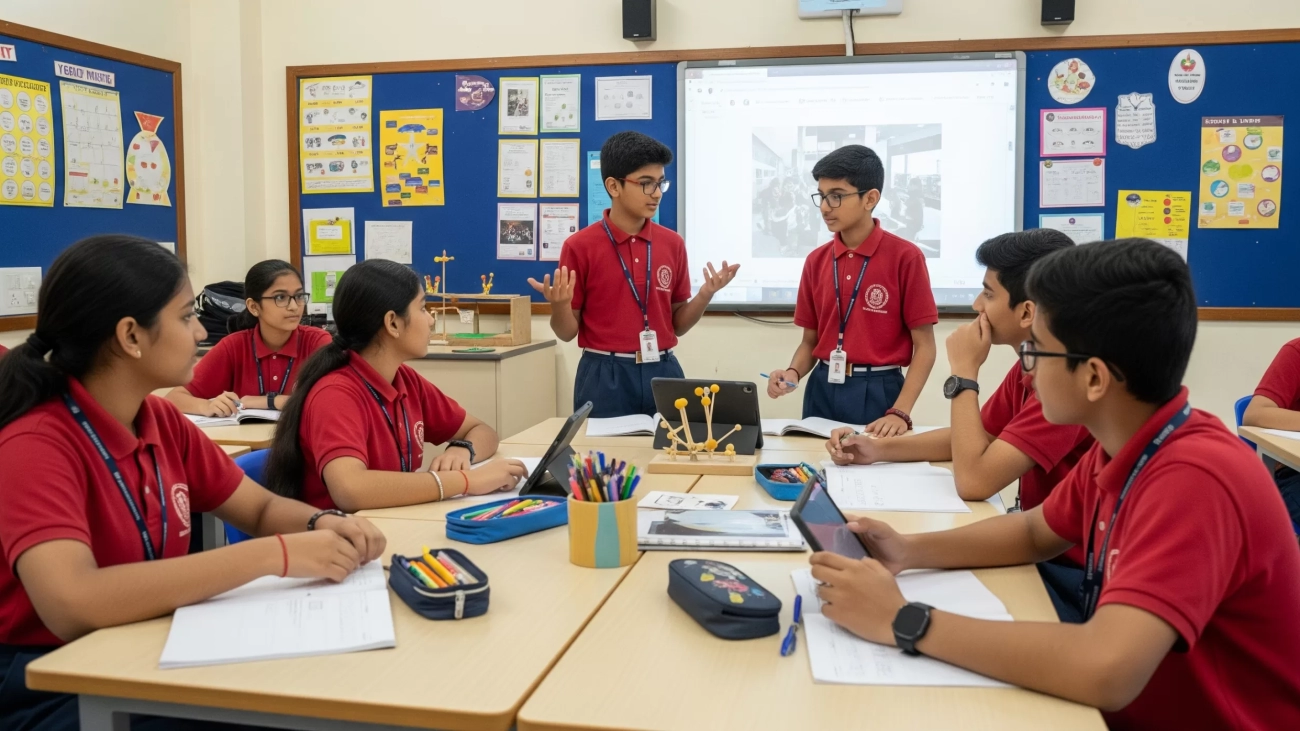
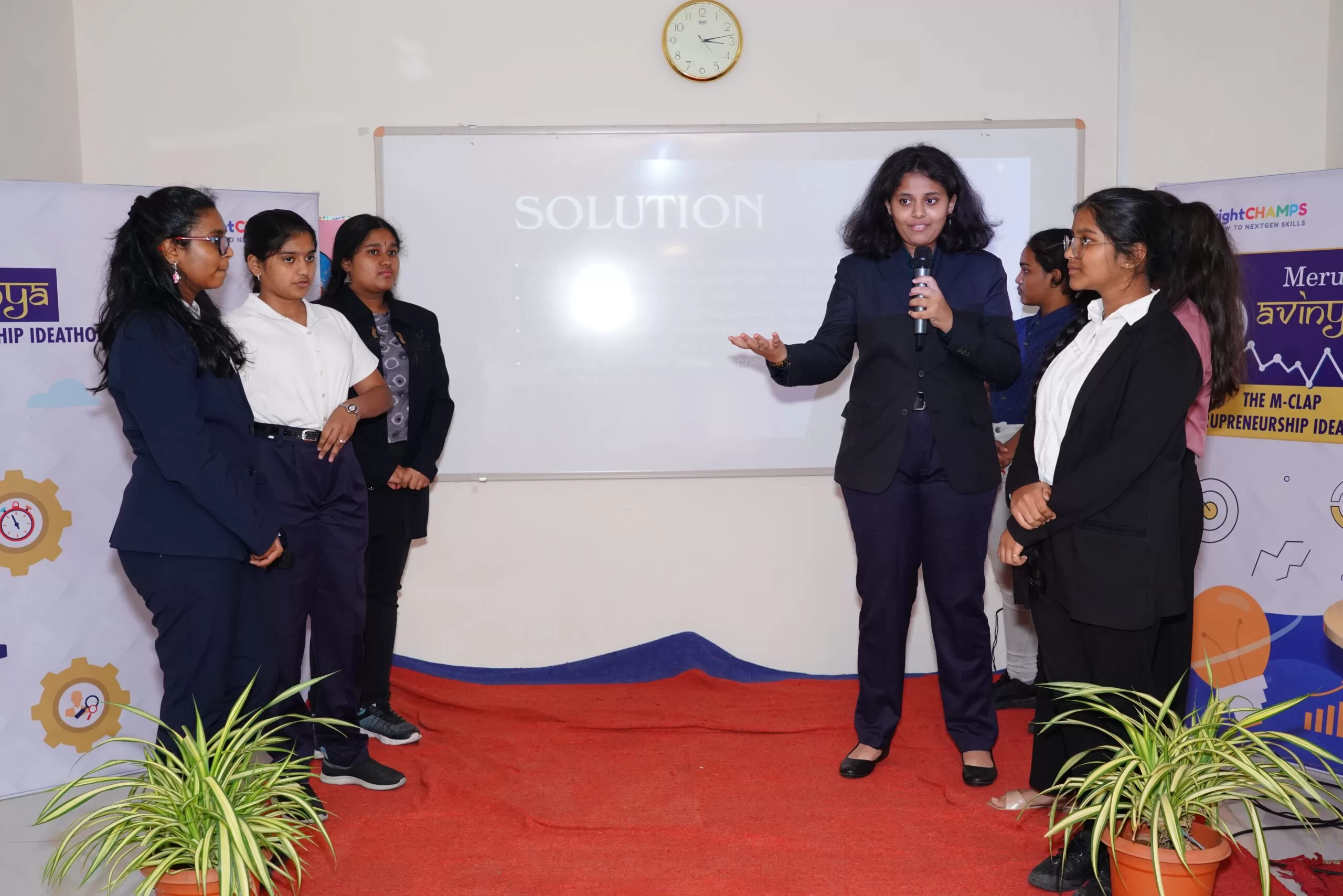
Entrepreneurship is not just taught here—it’s experienced. Integrated into both CBSE and Cambridge curricula from Grades 5 to 12, our approach is brought to life through the MCLAP (Meru Curiosity & Learning Acceleration Pathway), a hands-on journey that nurtures real-world problem-solving and innovation.
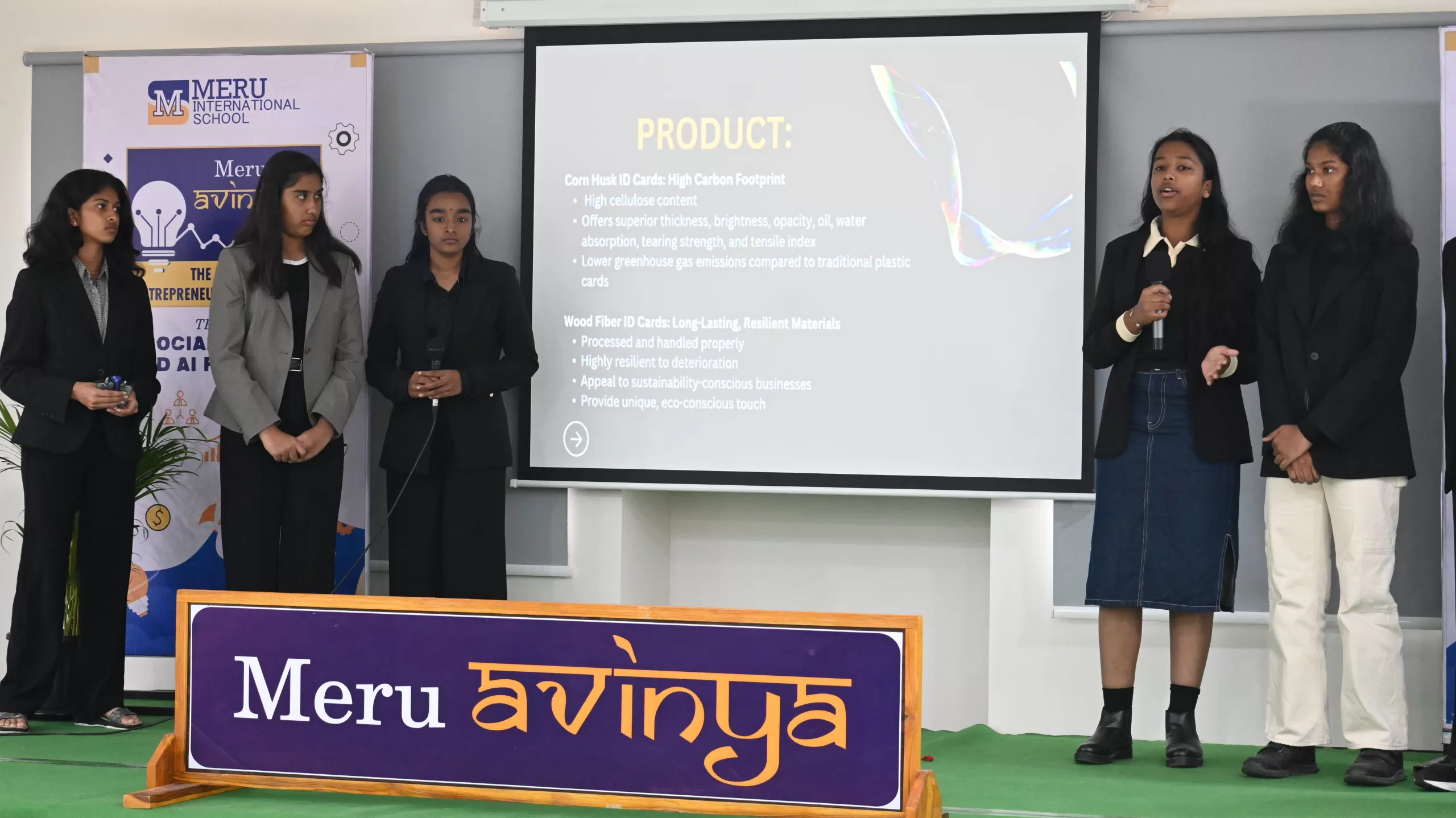
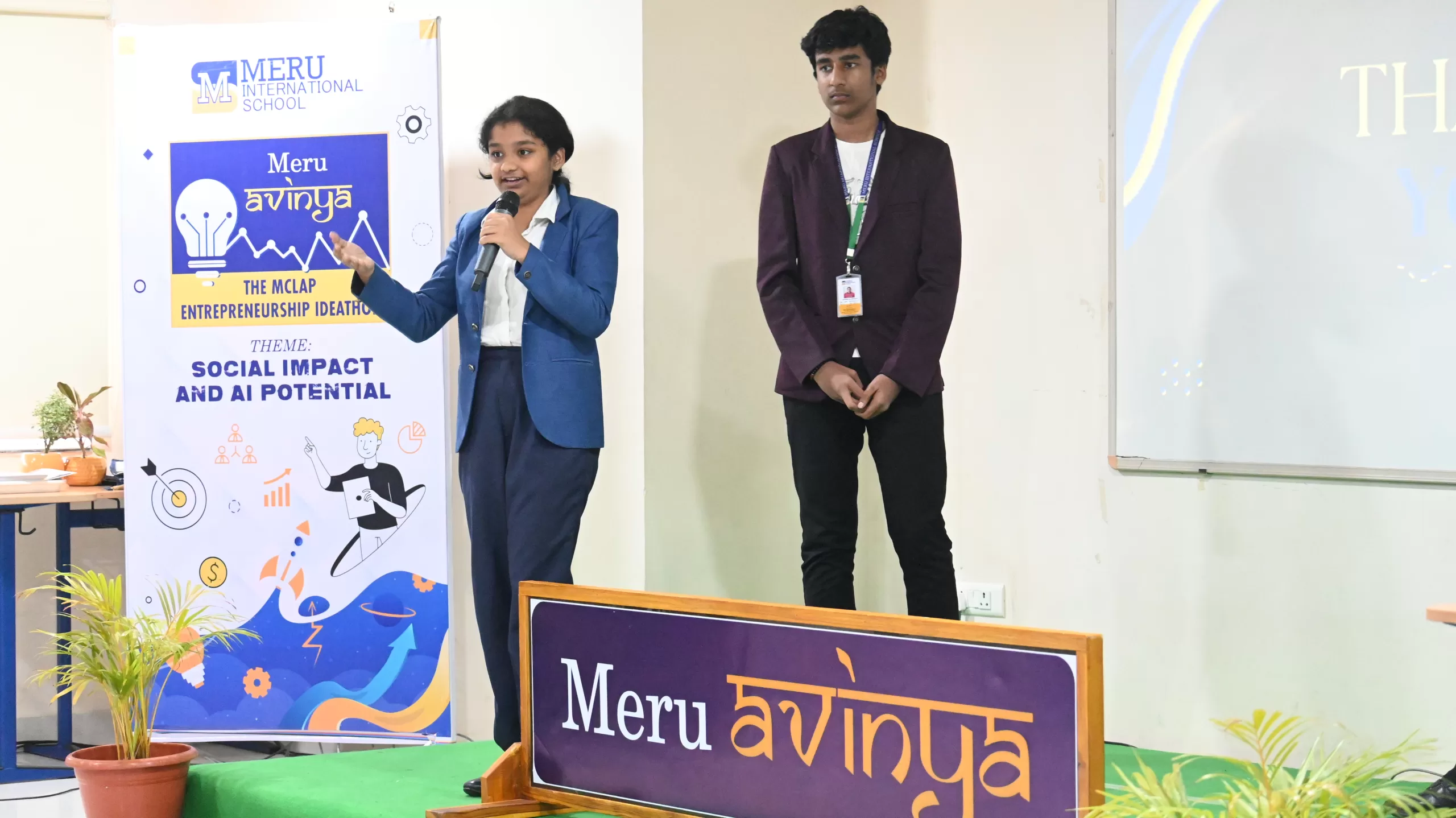
Through MCLAP, students begin with exploration and ideation, learning to identify authentic challenges and brainstorm impactful solutions. They then progress to market research and business planning—analyzing trends, understanding customer needs, and developing viable business models. This leads to prototyping, testing, and refining their ideas. At the pitching and validation stage, students present their ventures to industry mentors, gaining critical feedback and confidence. The journey culminates in the AVINYA Fellowship Program, where learners pitch their ventures to a wider audience—demonstrating not just what they’ve learned, but who they’re becoming: confident, capable, and creative changemakers ready to shape their own futures.
The Impact: Voices from Meru
“Being part of the AVINYA program helped me think beyond just academics. I learned how to take an idea and turn it into something meaningful.” – Grade 10 Student
“My child has grown into a confident, independent thinker. It’s amazing to see students learning business skills so early.” – Parent of a Grade 8 Student
“Entrepreneurship at Meru is about more than business. It’s about building a mindset of innovation, resilience, and leadership.” – Faculty Mentor
The Bigger Picture: Shaping the Future of Work
The future of education must reflect the future of work. Our students need more than facts—they need the mindset, courage, and capability to design their future. At Meru, we are not only preparing students to adapt to change—we are empowering them to lead it.
From job applicants to innovators.
From rote learners to resilient leaders.
From passive receivers to proactive creators.
It’s time to equip students with the skills to not just survive, but to thrive—and shape the world around them.
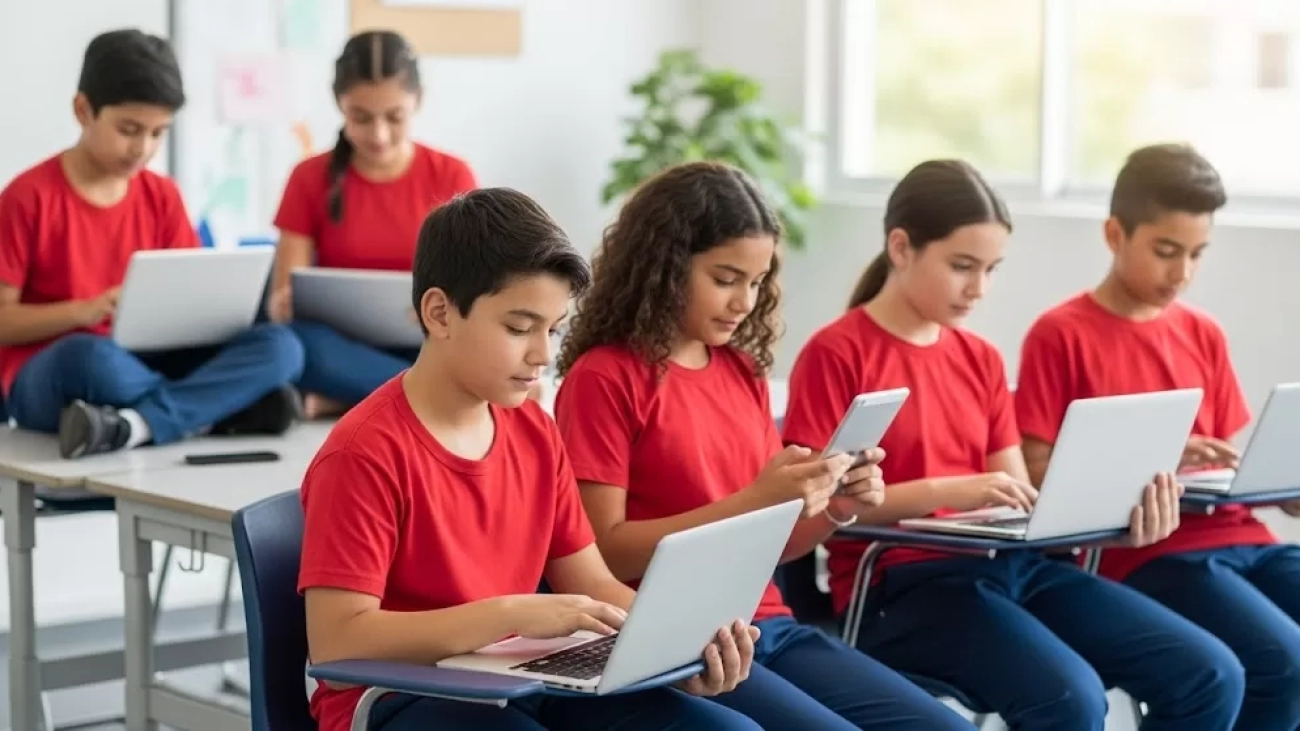
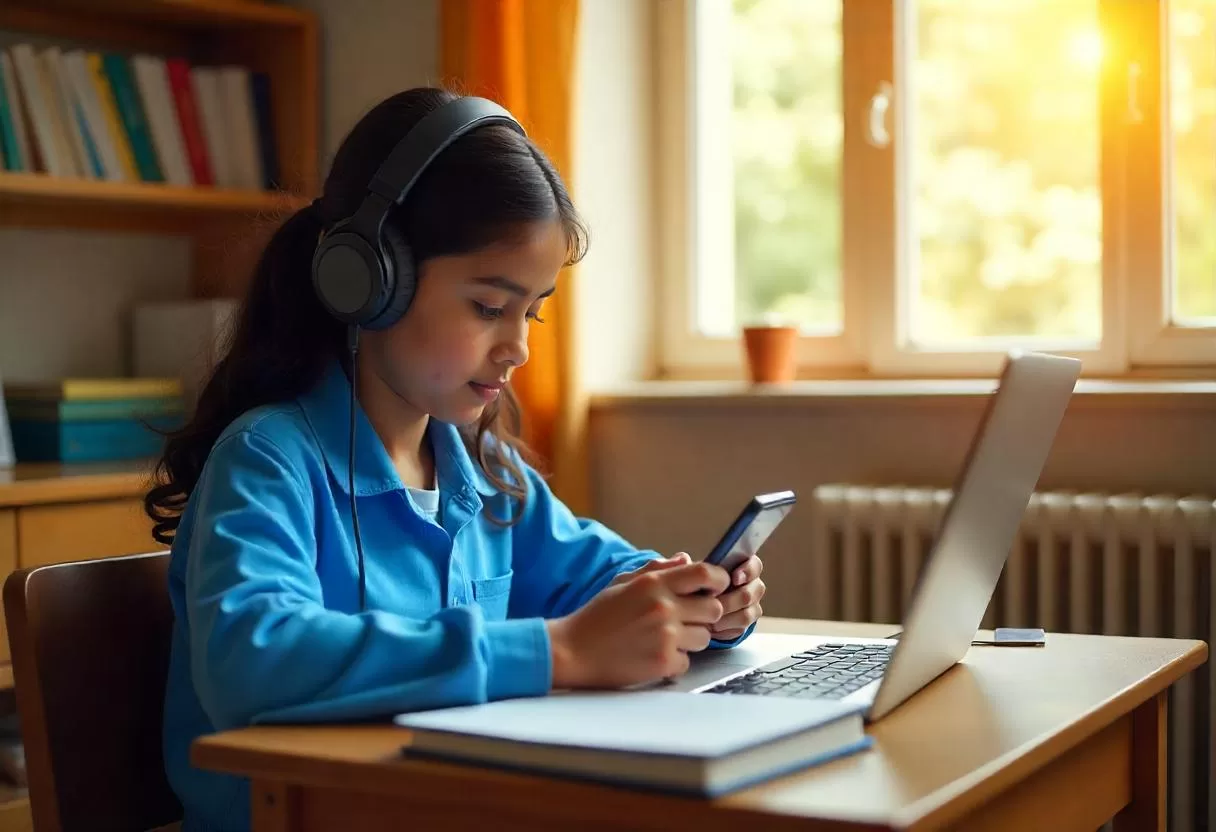
In today’s hyper-connected world, it’s common to see students juggling multiple tabs, chatting in group messages, watching videos, and even listening to music—all while working on a school project. At first glance, this might appear chaotic or unfocused. But is it really?
At Meru International School, we believe it’s time to re-examine how we understand focus and learning in the digital age.
A New Kind of Focus
One personal experience brought this into sharp perspective. While observing a seventh-grade student working on a group presentation, I noticed a flurry of digital activity: research tabs, collaborative messaging, presentation slides in progress, and background music. What initially seemed like digital overload slowly revealed itself as something else—coordinated multitasking. He wasn’t distracted. He was managing information, collaborating with peers, and constructing knowledge—just not in the traditional, linear way we might expect.
This observation highlighted a key insight: today’s learners engage with information differently, and our understanding of focus must evolve accordingly.
Rethinking Attention
There is a common perception that students today struggle with focus. But perhaps it’s not a matter of limited attention spans—it’s a different kind of attention altogether. Students are growing up in a world of rapid input and constant connection. They switch tasks quickly, process information rapidly, and operate in layered modes.
Instead of trying to slow them down, the challenge before educators is to help them go deeper. To guide them from fast consumption to meaningful engagement—from screens to skills.
Guiding Through the Digital Landscape
Access to information is no longer the issue. Understanding, filtering, and critically engaging with that information is where the real learning begins. Students are often overwhelmed by a constant stream of content, opinions, and distractions. What they need is not less technology, but more guidance on how to use it intentionally.
At Meru, we see technology not as a distraction but as a tool to be harnessed. When used purposefully, digital platforms can become powerful vehicles for creativity, collaboration, and inquiry.
From Tools to Thinking
Our goal as educators is not to compete with screens, but to help students transform them into instruments of learning. This begins by shifting our role from knowledge providers to learning facilitators.
Today’s students need educators who:
Help them ask better questions
Model critical thinking and digital discernment
Teach them to slow down, reflect, and reason
Encourage independent inquiry and purposeful use of tools
Classrooms as Hubs of Exploration
What if the classroom were more than a place to receive information? What if it became a launchpad for innovation?
We encourage students to engage actively—experiment, express, revise, and reflect. Because when learning feels authentic, it becomes lasting.
Building Cognitive Endurance
Instead of stretching attention spans through passive listening, we nurture cognitive stamina by feeding curiosity. Students don’t need more directives to “sit still.” They need more invitations to stand up, speak out, and explore their ideas.
Preparing Thoughtful Learners
As educators, our responsibility extends beyond content delivery. We are preparing young people for a world shaped by climate change, innovation, and complex global challenges. The leaders of tomorrow will not be those who simply consume information, but those who can think critically, communicate clearly, and act with purpose.
We aim to help students become:
Not just quick, but thoughtful
Not just tech-savvy, but discerning
Not just informed—but empowered
From Screens to Skills
Education today must move beyond information-sharing and into meaning-making. It is no longer enough for students to scroll, swipe, and skim. They must learn to pause, reflect, and create.
Let us shift the narrative:
From short clips to sharp minds
From distraction to deep thinking
From passive consumption to active contribution
By meeting students where they are and guiding them forward with intention, we help them transform not just how they learn, but how they live.
Whether you’re considering studying abroad or simply curious about countries beyond your borders, Germany is a name you’ll hear often; and for good reason. It is a country rich in culture, innovation, and academic opportunities, this European nation offers much to explore.
Location & Geography
Germany (Deutschland), is the sixth-largest country in Europe by land area (349,520 sq. km), and lies in central Europe with access to the North and Baltic Seas. It shares borders with nine European countries, making it a central hub for travel and cultural exchange. The geography transitions from lowlands in the north to uplands in the centre and the majestic Bavarian Alps in the south. The capital city, Berlin, is located in the northeast.
Climate
Germany has a temperate climate, leaning towards marine in the northern regions. Winters tend to be cool, cloudy, and wet, while summers are generally warm. Regional variations are common. Occasionally, the Föhn — a warm alpine wind — brings a sudden rise in temperature, particularly in the south.
Population
Germany has a population of over 83 million, making it the second-most populated country in Europe. The country became a united and sovereign state again in 1990 after a long historical divide. Urban areas are densely populated, while rural regions are more spread out. The median age is 46 years. German is the primary language spoken by over 95% of the population. Other languages include Serbian, North Frisian, Danish, Romani, Kurdish, and Turkish.
Society and Culture
Germany offers a dynamic mix of tradition and modernity. From classical music and museums to avant-garde art and cuisine, cultural diversity is a hallmark. Visitors and residents alike enjoy access to riverbanks and public gardens, which are common across cities and towns. Football holds a special place in German hearts, but walking and cycling are equally popular. With an excellent train network known for its speed and reliability, getting around is both convenient and efficient.
Economy
As a member of the European Union, Germany holds the largest economy in Europe and ranks fourth globally, following the U.S., China, and Japan. It is the world’s second-largest exporter and excels in sectors such as iron, steel, coal, cement, chemicals, machinery, electronics, vehicles, and shipbuilding. Germany also leads in wind turbines and solar power technology.
Several major international trade fairs are hosted annually in cities like Hanover, Frankfurt, and Berlin. The official currency is the Euro (€).
Government
Germany’s political system is a federal republic, with a central government and 16 individual states. While most governance is centralised, states are responsible for education, internal security, and local self-governance. The country’s present system is based on the West German Basic Law, established during reunification in 1990. The Federal Constitutional Court has the authority to repeal laws that conflict with this constitution.
Living Conditions & Cost of Living
For international students, the average cost of living in Germany is between €750–€950 per month. Public universities typically do not charge tuition fees, although specific states may have differing policies. Private universities, on the other hand, can cost around €20,000 annually. Health insurance is another essential expense, usually costing €50–€60 per month.
Education System
Germany’s education structure is aligned with many Western countries, comprising elementary, secondary, and tertiary (higher) education. The differences lie mainly in the variety of institutions offering higher education.
Professional academies for vocational training (Berufsakademien)
Most of these are publicly funded, and over 90% of students opt for public education.
For International Students
Germany is one of the most attractive destinations for international education, with nearly 325,000 international students currently enrolled in its institutions. For higher education admission, German language proficiency (DSH – DSH-Prüfung) is often required. However, the level of proficiency needed may vary depending on the course and language of instruction. Most institutions offer German language courses as part of their programs. Non-EU students must apply for a student visa before arriving. Visa processing can take several months, so planning ahead is crucial. Those who wish to work while studying should also check for applicable work permit regulations. For detailed information on visa and insurance requirements, visit: 👉 study-in.de Visa Information International students are allowed to work part-time. Many employers prefer student workers due to lower social security costs. Learn more here: 👉 Part-Time Jobs for Students
“A good teacher can inspire hope, ignite the imagination, and instill a love of learning.” — Brad Henry
Teaching is not only about academic instruction. In an age where knowledge is available at the tap of a finger, teaching has taken on a new dimension. Today’s learners grow up amidst a flood of information, algorithms, and AI-driven interactions. As educational tools evolve — from interactive apps to hyper personalised AI companions — the question arises: What sets great teaching apart?
The answer is clear. We teach not just to inform, but to connect.
At Meru International School, we believe that teaching is no longer just about content delivery — it is about building human connection. As educators, our role is not only to instruct but to engage, inspire, and care.
Rethinking the Classroom: From Delivery to Dialogue
Modern education requires more than subject mastery. It calls for emotional engagement, attuned listening, and presence. Our classrooms are no longer “chalk-and-talk” spaces; they are living ecosystems of inquiry, empathy, and belonging.
A student may forget the steps of a math problem or the finer points of punctuation, but they will remember the teacher who went the extra mile; who made them feel important and cared for. The one who noticed their silence. The one who made them laugh. The one who said, “I believe in you.”
These are the moments that anchor learning in memory. They don’t show up in tests, but they shape who children become.
At Meru, we integrate practices that make these connections intentional. For example, through our “Reflective Circle Time” sessions in the primary years, students are encouraged to express their feelings, identify challenges, and support one another. Teachers listen closely — not just to answers, but to silences. These are moments where real learning begins.
Bridge Builders, Not Just Educators
At Meru International School, teachers are not just educators — they are bridge builders. We help students cross from confusion to clarity, from self-doubt to self-belief, from isolation to belonging. This, more than any textbook, is the real curriculum: connection.
There was a moment once, after class, when a student said, “Ma’am, I laughed out loud remembering your silly jokes from English.” The teacher’s first instinct? Wait — what about the actual lesson?! The student grinned and added, “I remember that too. You cracked jokes as silly as a joker while teaching similes.” And that’s when it clicked. It wasn’t just the joke — it was the joy in the learning. That’s how content sticks: wrapped in connection.
So, Why Do We Teach?
We teach because knowledge matters — but connection endures. We teach because the most powerful lessons are not always in the textbooks, but in the conversations after class, the shared laughter in a science lab, or the reassurance offered before a test. At Meru International School, we prepare children not only for academic success but for life — to be compassionate, curious, and connected individuals. We believe the strength of our curriculum lies not only in its content but in its delivery — human, present, and purposeful.
Scotland occupies the northern third of the United Kingdom, sharing a border with England and surrounded by the North Sea, Atlantic Ocean, and Irish Sea. Major international airports in Edinburgh, Glasgow, and Aberdeen link Scotland to Europe, North America, and beyond. Frequent rail and bus services make travel across Scotland—and the rest of the UK—straightforward and efficient.
Diverse Geography & Lifestyle
Scotland’s landscape divides into three distinct regions:
The Highlands: Towering mountains, serene lochs, and rolling glens ideal for outdoor adventures and reflective study retreats.
The Lowlands: Home to vibrant cities—Edinburgh, Glasgow, Dundee, Stirling—offering bustling student life, cultural events, and economic opportunity.
The Islands: The Hebrides, Orkney, and Shetland archipelagos provide peaceful, scenic settings for focused study and creative inspiration.
Academic & Cultural Balance
Scotland’s universities and research institutions rank among the world’s best. Historic campuses sit alongside cutting‑edge facilities, all supported by a rich tapestry of music, art, and architecture. Students enjoy a balanced experience that blends rigorous academics with immersive cultural activities—from castle tours to Fringe Festival performances.
Climate & Natural Environment
Scotland’s temperate maritime climate features cool winters (0–7 °C) and mild summers (15–20 °C). Spring and autumn bring vivid natural colours, while frequent light rain nourishes lush greenery and clean air. Long summer days, with up to 17 hours of daylight, allow ample time for outdoor pursuits, sightseeing, and social events after lectures.
Quality of Life
Scotland is renowned for safe, welcoming communities and a high standard of living. Whether you prefer city apartments in Edinburgh or rural cottages in the Highlands, housing options suit varied budgets. Efficient public transport in urban areas and scenic rural roads ensure easy access to nature, heritage sites, and modern amenities alike.
Scotland’s Economy: Key Sectors
Scotland boasts a diverse economy with strengths in:
Financial Services: Edinburgh ranks as Europe’s leading financial centre outside London.
Energy: From North Sea oil and gas to world‑class offshore wind, tidal, and hydroelectric power.
Education: Prestigious universities attract over 325,000 international students, generating research and innovation.
Food & Drink: Exports of salmon, beef, and whisky underpin a globally recognised brand.
Technology & Life Sciences: Growing hubs in AI, fintech, pharmaceuticals, and biotech research.
Employment Landscape
Scotland’s overall employment rate is robust, with higher average earnings in finance and tech and lower wages in hospitality and agriculture. A pronounced skills gap in STEM and digital industries presents opportunities for qualified graduates. Public sector roles in healthcare, education, and local government also account for a significant share of jobs.
Government Support & Investment
The Scottish Government, through agencies like Scottish Enterprise and Highlands and Islands Enterprise, champions business growth and innovation. Skills Development Scotland offers apprenticeships and career services, while targeted infrastructure investments enhance green energy projects, broadband access, and transport links—particularly in rural areas.
Living Costs & Student Budgets
The Scottish Government, through agencies like Scottish Enterprise and Highlands and Islands Enterprise, champions business growth and innovation. Skills Development Scotland offers apprenticeships and career services, while targeted infrastructure investments enhance green energy projects, broadband access, and transport links—particularly in rural areas.
Compared to southern UK, Scotland offers a relatively lower cost of living. Typical monthly expenses include:
Rent: ~£1,000 for a one‑bedroom flat in Edinburgh; from £700 in other cities.
Utilities: £150–£300 for electricity, gas, water, and waste.
Food: ~£15–£20 per meal out.
Transport: Monthly passes cost £50–£70, with student discounts available.
Application Process & Academic Requirements
Undergraduate applications are submitted via UCAS, where you may select up to five courses. Required materials include transcripts, personal statements, and written references. Most courses demand 12 years of prior schooling (equivalent to A‑levels) and proof of English proficiency—commonly an IELTS score of 6.5 overall (6.0 per band).
Visa & Financial Documentation
Non‑EU students must obtain a Student visa and demonstrate sufficient funds for tuition and living costs. Processing times vary, so early application is essential. Universities may issue a Confirmation of Acceptance for Studies (CAS), which supports visa applications.
Scholarships & Funding
Numerous scholarships offset study expenses, including:
Saltire Scholarships: Funded by the Scottish Government for postgraduate STEM and renewable energy students from select countries.
Chevening Scholarships: UK government–backed awards for master’s degrees.
Commonwealth Scholarship & Fellowship Plan: Open to Commonwealth nationals for various degree levels.
University‑Specific Awards: Many institutions offer tuition and living‑cost grants—check individual university websites for details.
The recent freeze on processing student visas by American authorities has understandably caused panic among families who are preparing to send their kids overseas for college. To many Indian families, America is not only quality education but also a dream of international exposure and future success. But although this news might seem like a hurdle, it’s not the end of the road yet.
This blog compiled by the career readiness team at Meru International School will help you make sense of the situation and explore viable paths forward. will enable you to know:
What the pause really means
Why it's occurring
What your child can do in the meantime
Practical options and rational next steps
Why has the U.S. Paused Student Visas
It’s not an indefinite ban, but an administrative temporary hold. Some of the important reasons are:
Backlog of visa applications
Immigration or foreign policy changes
Post-COVID capacity concerns and increasing geopolitical tensions
Generally, such holds are removed within a few weeks or months. Nevertheless, Fall 2025 or Spring 2026 applicants should be prepared for setbacks or opt for alternative routes.
Practical and Realistic Alternatives
Following are realistic assignments and fall-back plans your child can opt for — without losing study momentum:
1. Transition to Countries with Open Student Policies
A number of nations continue to accept international students with clear visa procedures:
Canada: Great STEM and business courses; simpler PR options
UK: 2-year post-study work visa restored; rolling intakes
Australia & New Zealand: Welcoming visa regimes and job-ready degrees
Germany & France: Low/no-tuition public universities; plenty of English-taught courses
Ireland: Robust tech and pharma industries, particularly for CS, biotech
Talk to an international counselor to discover universities with available applications now.
2. Begin With Online/Hybrid International Degrees
Top universities (some in the U.S.) provide:
Remote semesters with transfer facilities later
Pathway or hybrid programs (such as Shorelight, INTO, Navitas)
This enables them to start coursework and transition on-campus when visas open again.
3. Take Up Short-Term Certifications or Projects
Rather than wasting an entire academic year, students can:
Take up certifications in Data Science, UI/UX, AI/ML, Business Analytics
Get enrolled in edtech platforms such as Coursera, Udacity, or Great Learning
Work on portfolio projects, GitHub profiles, or research papers
These not only establish credibility but enhance future college transfers and visa interviews.
4. Apply for Spring 2026 or Deferral
If your child already has a U.S. admit:
Reach out to the university for deferral to Spring 2026
Most colleges provide support and guidance through such policy breaks
5. Pursue Internships, NGO Work or Research in India
A year of organized, meaningful work isn’t “wasted” — it demonstrates:
Maturity
Social engagement
Initiative
Volunteering, internships, or establishing small student-run projects will make their profile stronger.
How Should Parents React?
Calm down, stay informed, and take action — this is a system delay, not a refusal of your child's potential.
Don't leap into mediocre choices out of desperation. Keep away from consultants who espouse overpriced, poor-quality universities.
Be there for your child emotionally</b<. They might be bewildered or frustrated — your faith in them is most important.
✨ A Word from Meru International School
At Meru International School, our commitment to future-readiness goes beyond academics. Our career guidance cell actively supports students from Grades 9 to 12 with:
University guidance for India and abroad
One-on-one counseling sessions for students and families
Workshops on global career trends, admissions, and scholarships
Regular university fairs and expert interactions
We believe that a temporary pause should never shake a long-term dream. As parents and mentors our goal is to ensure every child finds the right path — with clarity, confidence, and courage.